

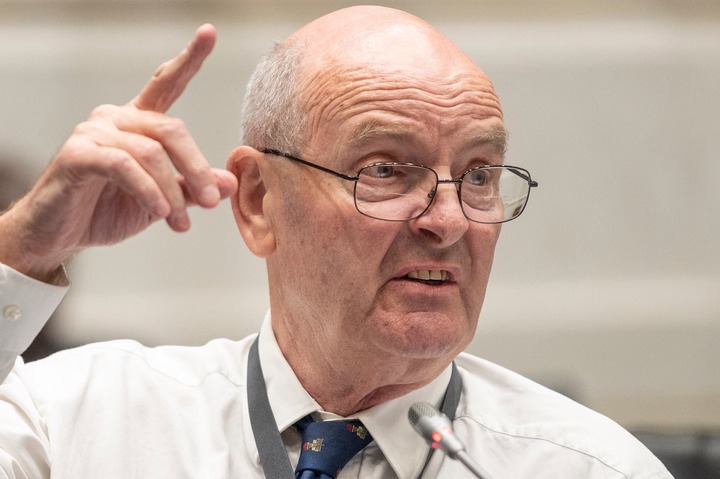
Forensic investigator Paul O’Sullivan concluded his testimony before Parliament’s ad hoc committee on Wednesday, delivering a scathing assessment of South Africa’s top three police generals and calling for systemic reform of the criminal justice system.
O’Sullivan directly accused National Police Commissioner General Fannie Masemola of being “part of the problem” within SAPS and unfit for his position, alleging Masemola was appointed despite suspicions of prior criminal involvement. He claimed Masemola failed to act on complaints regarding nepotism and corruption involving Crime Intelligence head Lt-Gen Dumisani Khumalo and other senior officers.
“The conclusion to be drawn is that he was an accomplice, either before or after the fact, in the crimes of the ‘Crime Intelligence Seven’,” O’Sullivan said.
Regarding Khumalo, O’Sullivan revisited his June 2025 arrest by the Investigating Directorate Against Corruption (Idac) for allegedly colluding to appoint an unqualified individual to the rank of brigadier. Despite being charged, Khumalo was granted bail and returned to office. O’Sullivan further alleged Khumalo used taxpayers’ money to fund a trip to Japan for a female major-general with whom he is rumoured to be romantically involved, and that he “throttles” funding distribution to provinces, hampering informer payments and contributing to rising crime.
O’Sullivan made more serious allegations against KZN Police Commissioner Lt-Gen Nhlanhla Mkhwanazi, claiming he was involved in “kidnapping and torture strategies.” He cited an affidavit from an individual named Nangy, who alleged he was unlawfully detained for over two months, tortured by police and private security, and had his vehicle destroyed—allegedly in Mkhwanazi’s presence. O’Sullivan also questioned Mkhwanazi’s authority to manage informers without proper security clearance and alleged undisclosed private business dealings with a known fraudster.
At the core of O’Sullivan’s testimony was the Crime Intelligence secret service account, or “slush fund,” which he described as a “piggy bank” for senior officials. He revealed its budget has grown from R98 million in 2012/13 to R600 million annually, with “zero accountability.”
“If the committee wants to find the root of all evil in the police, it needs to start with the slush fund… where millions are stolen and spent in secret with zero accountability,” he said.
O’Sullivan also assigned blame to political leaders spanning two decades—including former presidents Thabo Mbeki and Jacob Zuma, President Cyril Ramaphosa, and members of Parliament—for enabling corruption and failed leadership within SAPS.
He proposed legislative reforms requiring automatic suspension of any police or prosecution official arrested or charged with offences involving dishonesty, automatic dismissal upon conviction, and mandatory probity testing for all senior criminal justice system appointments.
O’Sullivan’s testimony, which spanned multiple days, has placed intense public and parliamentary scrutiny on SAPS’s top command structures. Masemola, Mkhwanazi, and Khumalo have not yet publicly responded to the allegations.
The ad hoc committee continues its inquiry into misconduct, corruption, and political interference within South Africa’s law enforcement agencies.


