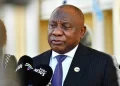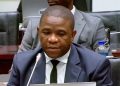
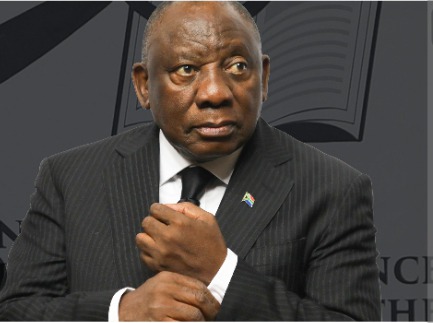
According to Paul O’Sullivan, a private investigator and forensic specialist, President Cyril Ramaphosa was previously trained as a police officer under his supervision and was formally designated as a police constable. This is a claim that has caused a lot of controversy. In the midst of continuing public discussions that are connected to the #AdHocCommittee, O’Sullivan made the assertion that Ramaphosa had gotten an official certificate confirming his employment as a constable and had also completed regular police training. As far as O’Sullivan is concerned, the training was carried out during a time when Ramaphosa was actively involved in the political and labour movements of the country.
In addition to this, O’Sullivan asserted that Ramaphosa stood out during the training process, referring to him as his “best student.” However, he argued that there are records that back his account, despite the fact that he did not disclose exact dates or thorough documentation to the public. There has been a lot of discussion about the remarks on social media, and people in South Africa have expressed a variety of views to them. Several people expressed their confusion as to why such information has not been widely disseminated in the past, while others demanded clarification regarding the context and purpose of the allegations of police training.
In the past, President Ramaphosa has discussed his participation in a variety of organisations during the apartheid era. These structures included activities that needed him to contact with security and state institutions. Ramaphosa rose from the head of a trade union to become the Head of State of South Africa. On the other hand, the Presidency has not yet released an official statement that either confirms or refutes the claims that O’Sullivan has mentioned.
The timing of the comments has garnered notice, according to political analysts, because of the ongoing parliamentary proceedings and the increased political scrutiny that surrounds the President. They warn that the assertions should be regarded as allegations rather than established facts because there is no documentation that has been independently checked before the claims are made. As the discussion continues, there is an increasing demand for additional clarification from both O’Sullivan and government officials. This is being done in order to ascertain whether or not the assertions are accurate and whether or not they are relevant within the larger political and historical framework of South Africa.