

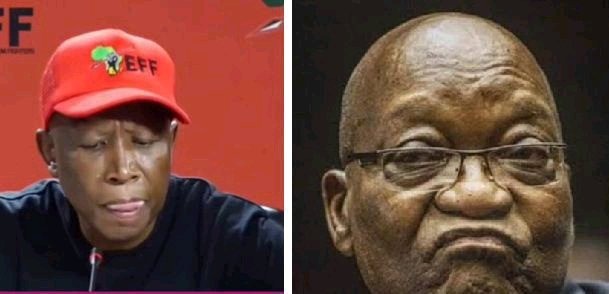
Julius Malema, leader of the Economic Freedom Fighters (EFF), made the announcement public, claiming that the uMkhonto weSizwe (MK) Party is not gaining support but rather losing momentum. Malema argued at a recent political gathering that the initial enthusiasm for the MK Party is beginning to fade.
He gave the impression that the party’s ascent to power was driven more by protest feeling than by clear policies or long-term plans. “Movements built on emotion struggle to maintain consistency,” Malema said, stressing that the most crucial things for fostering voter loyalty are credible leadership and clearly defined programs of action.
These remarks come as the opposition parties engage in fierce campaigning to solidify their positions ahead of the upcoming elections. Political observers claim that the animosity between the EFF and the MK Party has intensified in provinces where their constituents are comparable. Public criticism of politicians often betrays their overall strategic stance, according to expert Sipho Dlamini.
He went on to say that politicians utilise comments like this to gain the confidence of the voters. To find out if the MK Party is declining or just levelling out, we need to look at measurable electoral success and grassroots organization. In reaction to Malema’s comments, the MK Party has not released any formal statement.
But party leaders have previously said that they have a strong and expanding base of support in key locations. There is growing political polarisation in South Africa, thus discussions on the influence and expansion of political parties are sure to spark heated debates. Voters will be seeking political parties in the coming months that can demonstrate popular support, solid organisational bases, and viable agendas.


