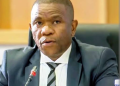
Former South African Public Protector and convenor of the MK Party Busisiwe Mkhwebane has voiced his disapproval of the Draft Revised White Paper on Citizenship, Immigration, and Refugee Protection. In his criticism, Mkhwebane has advocated for South Africa to withdraw from the 1951 Refugee Convention and re-acquire membership with reservations that give priority to the country’s requirements. The government is currently soliciting feedback from the general public over the White Paper, which was initially released in 2024 and underwent revisions in the latter half of 2025.
The fragmented migration rules of South Africa are the focus of the draft White Paper, which tries to relieve the demands on public services that are generated by the high number of refugees entering the country. The document provides a summary of suggestions for the regulation of refugee status, the simplification of asylum procedures, and the guarantee that migration management is in accordance with the goals of national development.
Mkhwebane contends that South Africa would be able to establish conditions that safeguard local interests while still achieving its humanitarian commitments if it were to withdraw from the Refugee Convention. She makes reference to a precedent that has been established internationally, mentioning that records from the United Nations High Commissioner for Refugees (UNHCR) indicate that more than seventy states have expressed reservations to the Convention, frequently restricting the rights of refugees to receive welfare or to have their legal rights enforced in order to conserve national resources.
Her attitude has stirred controversy inside South Africa, with some individuals advocating for more stringent migration restriction and giving citizens priority when it comes to access to services, while others warn against weakening human rights commitments. Experts in the field of law emphasize that any process of withdrawing or re-accrediting would require thorough study in order to comply with both domestic law and international responsibilities.
The discussion, according to observers, is a reflection of greater difficulties in South Africa between migration control and national priorities. As a result of the high number of asylum seekers and refugees, urban centers have seen a pressure on their health, education, and social services, which has led to requests for reforms that strike a balance between providing humanitarian protection and properly allocating resources for people.
In order to receive feedback on the White Paper until the beginning of 2026, the Department of Home Affairs has extended an invitation to stakeholders, members of civil society, and the general public. It has been said by officials that the comments would serve as a basis for final policy decisions that are intended to improve legal certainty, administrative efficiency, and social cohesion while also addressing difficulties related to migration.
The criticism offered by Mkhwebane highlights the ongoing discussion regarding how South Africa can handle migration in a responsible manner while protecting national interests. It also brings to light the intricate relationship that exists between international commitments and domestic priorities in the process of formulating refugee and citizenship policy formulation.