

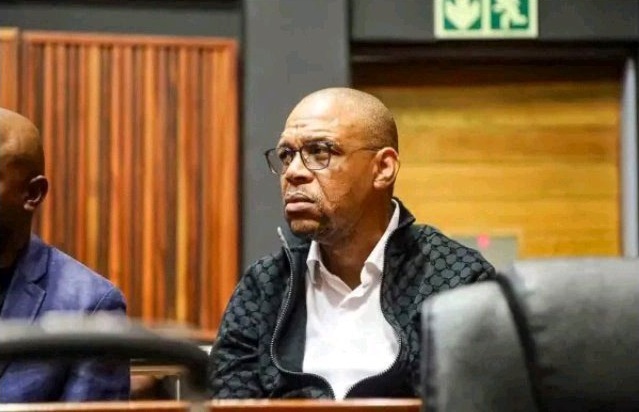
Pule Mabe, who once served as the national spokesperson for the African National Congress (ANC), has expressed his support for what he refers to as a “stronger and united ANC” as the party prepares for its highly awaited national electoral conference in 2027.
The ability of the African National Congress (ANC) to heal splits and restore public confidence is the key to the organization’s future, according to Mabe, who has played a vital role in the communications machinery of the ruling party. At a time when the institution is dealing with internal issues, coalition governance complexities, and a growing need for renewal from its support base, his comments come after the organisation has been battling these challenges.
During his remarks to members of the media on Tuesday, Mabe emphasised that the African National Congress (ANC) will experience a momentous occasion in the year 2027. The African National Congress (ANC) has to emerge strong, united, and firmly positioned as a movement for the people. According to what he said, our dedication should not be about people but rather about the continuation and revitalisation of the organisation.
In recent years, the African National Congress (ANC) has been confronted with unprecedented challenges, one of which is a fall in electoral support, which has compelled it to enter into coalition agreements at both the national and municipal levels. Its credibility has been severely damaged by the factional conflicts and corruption scandals that have occurred. Mabe suggested that the only way forward that is feasible is to come together. “We cannot afford to enter the year 2027 in a fragmented formation. He continued by saying, “The people of South Africa are looking to the African National Congress (ANC) to lead with integrity, discipline, and vision.”
Mabe stated that his role would be to push for a communal spirit inside the movement, despite the fact that he did not specify whether he would run for any leadership post within the organisation. The analysts believe that his standing indicates an early mobilisation phase, which is significant because the competition for leadership jobs is anticipated to get more intense in the years to come.
Ralph Mathekga, a political analyst, made the observation that Mabe’s comments highlight tensions within the African National Congress (ANC). “What he is effectively saying is that the African National Congress (ANC) runs the risk of experiencing greater decline if it does not address the internal differences that exist within it. According to his explanation, “Unity is no longer merely a slogan; rather, it is a matter of survival.”
The African National Congress (ANC) is in the process of preparing for its mid-term policy review and beginning preparation for 2027. It is anticipated that voices such as Mabe’s would define the tone of pre-conference debates. It is likely that his demand for a unified front may resonate with members who are looking for stability; nevertheless, it is yet unknown whether the organisation will be able to reconcile long-standing rivalries.
For the time being, Mabe has made it abundantly apparent that his allegiance is with an African National Congress (ANC) that prioritises the group over individual ambition. “The African National Congress (ANC) must always be bigger than all of us,” he said.


