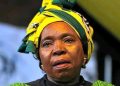

A prominent government official has recently attracted attention due to a perceived change in their public position, especially regarding immigration. This individual, who rose to prominence by publicly advocating a firm stance against the presence of foreign nationals—a position that resonated with a substantial segment of the electorate—has become markedly more reserved on the issue since assuming a senior official position.
This shift in approach has caused many to perceive the situation as a definitive example of political strategy. Political commentator Thabo Maseko articulated that the official adeptly leveraged the prevailing public sentiment. He employed forceful language towards foreigners to resonate with the sentiments of the public, according to Maseko. But once in office, the necessity for such forceful rhetoric diminishes. His position is assured, and his salary remains ongoing.
On social media, numerous individuals have expressed their viewpoints, characterising this as an exhibition of hypocrisy. The argument posits that the official may have employed populist rhetoric as a means to advance their political career, and now, the emphasis has shifted towards personal gain rather than actively resolving the issues raised during the campaign.
Experts additionally warn that such conduct may adversely impact public trust. Professor Linda Ndlovu of the University of Johannesburg remarked, “When leaders place their personal interests above their duty to serve the public, it undermines the fundamental principles of democratic accountability.”
Efforts to obtain a statement from the politician’s office concerning their current immigration or foreign national policies have been met with a refusal to provide comment. They have preserved a meticulously neutral public image. Observers indicate that this reticence may represent a deliberate tactic to avoid possible controversies while maintaining their government remuneration.
This circumstance highlights significant concerns regarding the equilibrium between political opportunism and public expectations. Currently, those who elected this representative are left to consider whether their interests are genuinely being represented or if the emphasis has shifted towards personal enrichment.