
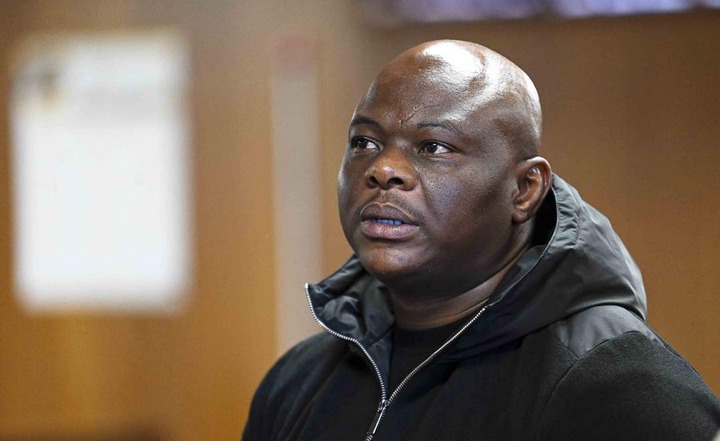
Controversial businessman Edwin Sodi has once again found himself at the centre of public scrutiny after revelations that a luxury shopping spree worth more than R40,000 could now contribute to his assets being seized and auctioned by the state. The development forms part of ongoing legal efforts by authorities to recover funds allegedly linked to corruption and financial misconduct connected to high-profile state contracts.
Sodi, who rose to prominence through lucrative government tenders, has been under investigation for several years in relation to contracts awarded during his involvement with major public infrastructure projects. Prosecutors argue that his lavish lifestyle, including the purchase of high-end designer items, reflects the proceeds of unlawful activities rather than legitimate income. Among the items now under scrutiny is a Louis Vuitton purchase that investigators say highlights a pattern of excessive spending while legal proceedings were already underway.
The state has moved to strengthen its case by demonstrating how seized financial records and transaction histories show significant expenditure on luxury goods at a time when Sodi was allegedly benefitting from irregular contracts. According to court documents, such spending could be used to support claims that his assets should be forfeited under South Africa’s asset forfeiture laws. If successful, this would allow the state to auction off properties, vehicles, and other valuables believed to be linked to unlawful gains.
Legal experts say the case underscores how lifestyle evidence is increasingly being used to build corruption prosecutions. Rather than relying solely on complex paper trails, authorities are placing emphasis on visible patterns of wealth that cannot be easily explained by declared income. In Sodi’s case, prosecutors argue that his spending habits form part of a broader narrative that raises serious questions about the source of his wealth.
Sodi has consistently denied wrongdoing and maintains that his business success is legitimate. His legal team has previously argued that the state is unfairly targeting him and attempting to criminalise wealth without proving direct criminal conduct. They insist that purchases such as luxury clothing and accessories do not constitute evidence of corruption and warn against what they describe as a dangerous precedent.
The potential auctioning of Sodi’s assets comes at a time when public frustration over corruption remains high. Many South Africans have expressed anger over billions of rand lost to graft while basic services continue to deteriorate. For critics, cases like Sodi’s symbolise a system where politically connected individuals lived extravagantly while ordinary citizens struggled with unemployment, load-shedding, and rising living costs.
Civil society organisations have welcomed the state’s aggressive stance, arguing that asset recovery is one of the most effective tools available to deter corruption. They say stripping individuals of unlawfully acquired wealth sends a stronger message than lengthy trials that often end without consequences. However, they also caution that due process must be respected to avoid wrongful seizures.
The outcome of the case could have significant implications beyond Sodi himself. A successful asset forfeiture would reinforce the state’s commitment to holding powerful figures accountable and recovering public funds. Failure, on the other hand, could deepen public cynicism about the justice system’s ability to tackle elite corruption.
As legal proceedings continue, the spotlight remains firmly on Sodi’s financial dealings and the question of whether luxury purchases, such as the Louis Vuitton spending spree, will ultimately contribute to the loss of his assets. For many South Africans, the case represents a broader test of whether accountability will finally follow excess.


![[VIDEO] Andile Mpisane Criticised for Dumping Gucci Items at the Mall: “This Is Not Normal”](https://ireportsouthafrica.co.za/wp-content/uploads/2023/07/68bed0978c5a40d699f95c563521e573-1-120x86.webp)