

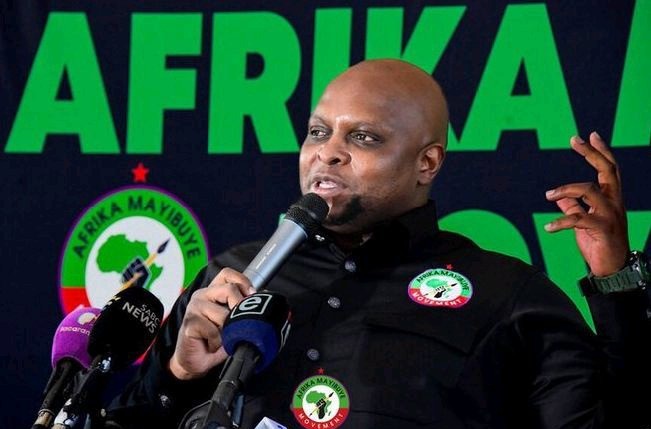
Floyd Shivambu’s Afrika Mayibuye Movement is demanding the immediate dissolution of the Ad Hoc Committee set up by Parliament to investigate serious allegations made by KwaZulu-Natal Provincial Police Commissioner, Lieutenant-General Nhlanhla Mkhwanazi. The movement argues that the committee lacks legitimacy, as its members are the same politicians accused of interfering with police operations.
They assert that only the Madlanga Commission of Inquiry, created by the President, should handle the investigation into corruption, political interference, and the infiltration of criminal syndicates within the South African Police Service. They contend that this Commission is an independent judicial body better equipped to investigate sensitive and high-stakes allegations without political bias.
This position is supported by Mkhwanazi’s claims of ongoing political interference in police investigations, particularly those related to political killings, organized crime, and significant corruption cases. Afrika Mayibuye argues it is illogical and dangerous for the same politicians implicated in these issues to oversee the investigation, creating a clear conflict of interest that jeopardizes public trust in the process.
At the same time, the Madlanga Commission is actively gathering evidence and testimonies from senior law enforcement officials. Mkhwanazi has previously cautioned that without addressing corruption and interference, the entire criminal justice system is at risk of collapse, highlighting the dismantling of key investigative units and alleged collusion among senior police, politicians, and criminal groups.
The Afrika Mayibuye Movement fears that Parliament’s involvement may dilute the allegations or sway public opinion before the Commission concludes its investigation. They insist that a judicial inquiry is the only legitimate forum capable of addressing such serious claims impartially. They argue that dissolving the Ad Hoc Committee would eliminate redundancy, safeguard the investigation’s integrity, and prevent those implicated from interfering with the process.
As public scrutiny intensifies, Parliament may face scrutiny over whether maintaining the Ad Hoc Committee brings clarity or further complicates this already sensitive national issue. For many South Africans, the primary concern remains whether the truth regarding corruption, political interference, and the influence of organized crime within SAPS will ultimately be revealed.


