

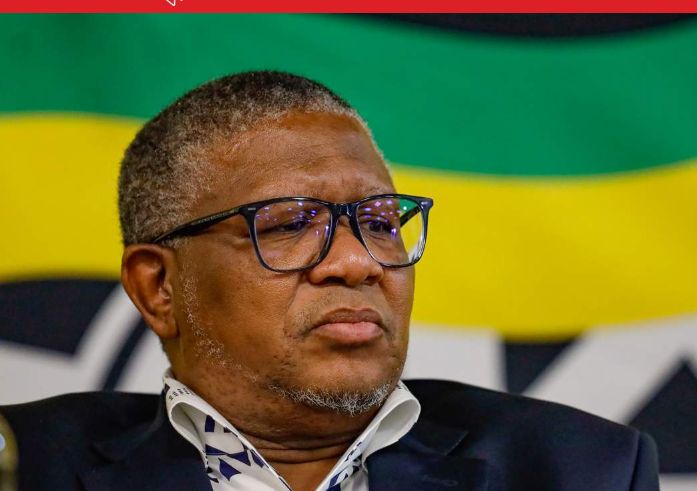
ANC Secretary‑General Fikile Mbalula has issued a forceful call for swift accountability over corruption allegations facing the ruling party, insisting that arrests should not be delayed until the Madlanga Commission concludes its work.
Speaking at a media briefing on Friday, Mbalula said public patience was running out, and law‑enforcement agencies must act decisively where wrongdoing is evident. His remarks came amid mounting pressure on government institutions to move beyond lengthy inquiries and deliver visible consequences for graft.
“We must not even wait for the Madlanga Commission to finish. If people must be arrested, it must happen now,” Mbalula declared. He argued that waiting years for investigative reports to be finalised only worsened public distrust and allowed corruption to deepen unchecked.
The Madlanga Commission was set up to probe allegations of widespread corruption, including claims linked to state procurement and political funding. Since its establishment, the inquiry has held hearings, collected testimony and reviewed multiple submissions, but a final report has not yet been released.
Mbalula warned that commissions should not become burial grounds for accountability, saying their purpose must be complemented by real intervention from policing and prosecutorial bodies. “We cannot behave as if commissions substitute active law enforcement. If evidence exists, action must be taken,” he emphasised.
Political analysts say Mbalula’s comments reflect the shifting tone within the ANC as the party confronts public anger over service failures, corruption scandals and internal factional battles. Analysts note that while the ANC has repeatedly spoken about renewal, critics maintain that little has been done to punish wrongdoing within its ranks.
Civil society organisations echoed the call for urgent prosecutions but cautioned that arrests must follow solid evidence and due process. Opposition parties accused the ANC of “talking tough too late,” claiming that law enforcement had been weakened for years through political interference.
Meanwhile, the National Prosecuting Authority has maintained that it acts based on legally sound cases and would not be rushed into politically influenced decisions. However, calls for visible action continue to grow as South Africans demand proof that institutions are capable of enforcing accountability.
Mbalula insisted that his remarks were not political theatrics but a reflection of the ANC’s renewal agenda. He said corruption must be rooted out regardless of who is implicated and assured that the party supports independent prosecutions.
With the Madlanga Commission still underway, attention now turns to whether Mbalula’s strong words will translate into concrete action—or remain another promise in a long‑running battle over accountability in South Africa’s political landscape.


