

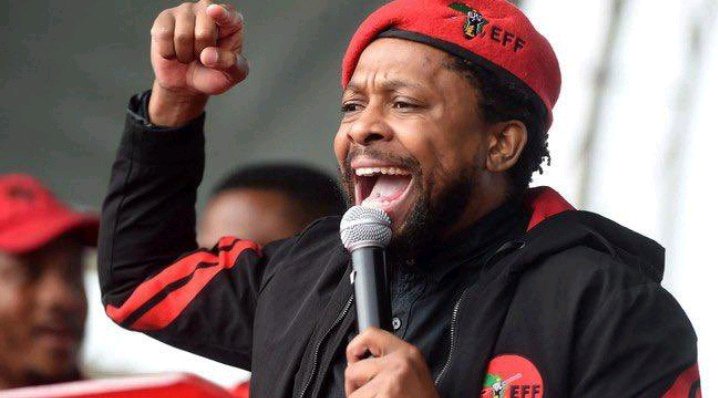
Former Economic Freedom Fighters (EFF) Member of Parliament Dr. Mbuyiseni Ndlozi has rekindled discussion regarding the State Capture Inquiry by asserting that the entire process should never have been designated as the Zondo Commission.
During a widely listened-to podcast this week, Ndlozi contended that the commission’s genuine intellectual and moral driving force was not its chairperson, Deputy Chief Justice Raymond Zondo, but rather Constitutional Court Justice Mbuyiseni Madlanga, who served as one of the evidence leaders.
Ndlozi stated that, with all due respect, the Zondo Commission ought to have been the Madlanga Commission Team.
Justice Madlanga served as the pillar of support. He posed the most incisive enquiries, demonstrated superior ability in synthesising information, and revealed the corruption in a manner that offered no avenue for evasion.
Ndlozi highlighted numerous prominent instances in which Madlanga’s meticulous cross-examination effectively undermined witnesses who had previously demonstrated confidence in the presence of other evidence leaders. The former MP commended Madlanga’s capacity to maintain composure while delivering remarkably precise judgements, characterising his approach as “surgical yet compassionate.”
Numerous South Africans who have diligently followed the proceedings over the years have expressed similar sentiments. Viewers frequently observed that instances in which Justice Madlanga assumed a leading role appeared to signify the commission’s decisive breakthrough through layers of denial and evasion.
Although Zondo assumed the public role and ultimate accountability for the inquiry, Ndlozi’s remark underscores a broader reality: the most noteworthy legal performances often originated from the discreetly exceptional Madlanga, whose reputation for intellectual rigour was well established long before state capture emerged as a national crisis.
The statement has elicited humorous consensus across social media, with users posting clips of Madlanga’s enquiries and joking that the commission’s final report should include a footnote acknowledging “the real MVP.”
Whether one concurs with Ndlozi or not, few contest that Justice Madlanga emerged from the extensive inquiry with his reputation markedly strengthened—a uncommon triumph in a process that revealed the extent to which South Africa’s institutions had been compromised.
Ultimately, the name on the report may remain Zondo, but for many who observed every arduous moment, the essence of the commission will forever, at least in part, be associated with Mbuyiseni Madlanga.


