

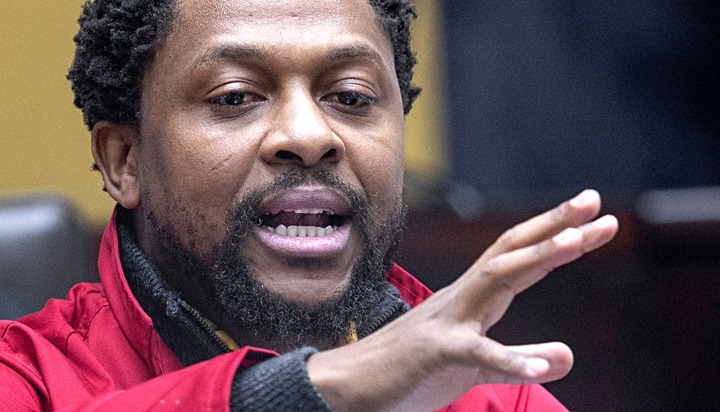
He stated that ANC members attend conferences and present themselves as introducing innovative ideas and genuine change. However, he maintains that this is not accurate. According to him, the leaders act as though they are distancing themselves from previous detrimental practices, yet no substantive change occurs. He clarified that the same individuals repeatedly reappear exhibiting consistent behaviour, solely motivated by the pursuit of personal power.
Ndlozi stated that the internal competition within the ANC does not pertain to enhancing the well-being of South Africans. Instead, he contends that it primarily concerns individual advantage. He contended that the conflicts and disputes observed during ANC meetings are not motivated by a commitment to public service but by a desire for control over positions and access to resources. He stated that numerous leaders claim to advocate for the people, yet in reality, they are primarily pursuing their own interests.
His message depicts a celebration caught in a repetitive cycle. Even when leaders discuss renewal, unity, or the development of a stronger organisation, he asserts that the actions taking place behind the scenes convey a contrasting narrative. Ndlozi contends that many of the tensions within the ANC are driven by internal interests rather than genuine political disagreements.
He cautioned that, absent a transformation of this culture, South Africans should not anticipate significant progress arising from these conferences. In his perspective, the public is frequently led to believe that novel ideas are under discussion, while the actual agenda remains unchanged. Ndlozi stated that this pattern has recurred numerous times, and each instance clearly demonstrates that the primary issue revolves around the struggle for access to authority and associated benefits.
His comments have contributed to the continuing discussion regarding whether the ANC remains capable of self-renewal and prioritising public service. Numerous South Africans share similar apprehensions regarding the party’s internal conflicts and the impact these disputes have on leadership decisions. Ndlozi’s remarks exemplify a broader sense of frustration among individuals who believe that political leaders should prioritise the nation’s interests above personal agendas.


