

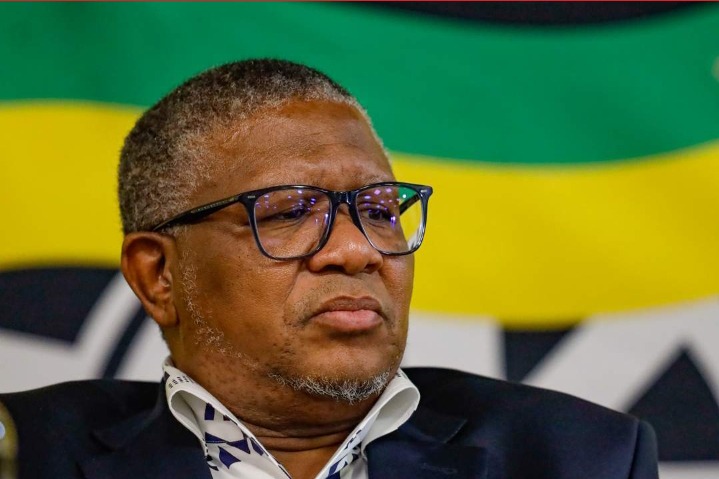
ANC secretary-general Fikile Mbalula has come out swinging against party members reportedly associated with alleged underworld figure Vuzimusi “Cat” Matlala, warning that the ANC “cannot and will not be contaminated by criminal networks hiding behind political colours.”
Speaking during a media briefing at Luthuli House on Friday, Mbalula delivered one of his strongest internal rebukes yet, describing the growing proximity between certain ANC figures and known criminal operators as a “direct attack on the organisation’s integrity.” Without naming individuals, he confirmed that reports linking senior party members to Matlala had reached his office, prompting an internal process to verify the extent of the relationships and whether they breached the party’s code of ethics.
Mbalula emphasised that the ANC could not afford to appear tolerant of criminality at a time when public trust in political institutions was already fragile. “Anyone who believes the ANC is a playground for gangsters must disabuse themselves of that notion immediately,” he said. “We will not allow people to use the organisation as a shield for dubious dealings or to sanitise their proximity to the underworld.”
He stressed that the ANC’s renewal project—long criticised as slow and inconsistent—required uncompromising action against individuals perceived to be working with or benefiting from criminal syndicates. “We cannot root out corruption in government while ignoring corruption in our own ranks,” he added.
Insiders say the allegations involving Matlala surfaced during an internal risk review linked to the ANC’s preparations for upcoming provincial conferences. Matlala, who has been repeatedly associated with protection rackets and illicit business operations, has long been viewed by law enforcement as a central figure in Johannesburg’s underground economy. Although he has not been convicted of crimes associated with his alleged underworld activities, his name frequently appears in intelligence briefings and criminal investigations.
Mbalula’s comments are expected to sharpen tensions within the ANC, particularly among factions accused of maintaining ties with figures operating in the grey zones between business, politics and organised crime. Several regional leaders have privately expressed concern that the SG’s remarks could trigger a wave of disciplinary action and expose long-standing networks previously overlooked for the sake of “political stability.”
But Mbalula appeared unmoved by potential backlash. “Renewal is not a slogan,” he insisted. “It is a painful process, and if it requires us to confront our own comrades, then that is exactly what we will do.”
In closing, he vowed that any implicated members would face consequences should ongoing internal assessments confirm wrongdoing. “The ANC belongs to the people of South Africa,” Mbalula said. “Not to criminals, not to shadowy operators, and certainly not to those who believe political power can coexist with underworld influence.”
His message was unmistakable: the party’s fight to restore credibility is now colliding head-on with the murky alliances some members have cultivated and the SG appears ready for the confrontation.


