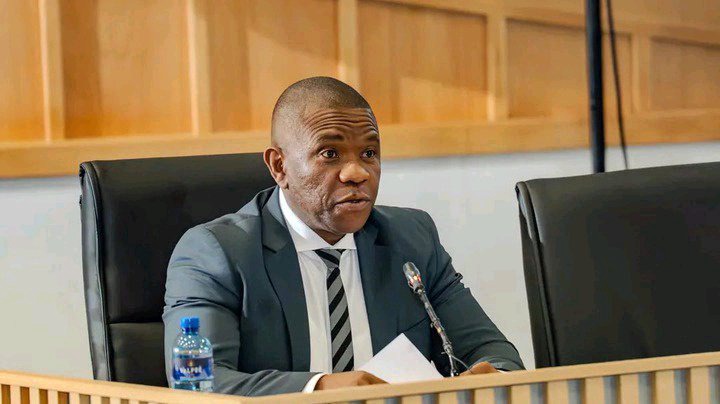
A comparison of the academic achievements of Lieutenant General Nhlanhla Mkhwanazi, the current KwaZulu-Natal Police Commissioner, with the reported educational background of the former Police Minister, Bheki Cele, has re-ignited the long-running public discourse about the SAPS leadership structure. This comparison has rekindled a long-simmering public outcry over what many see as a crucial state institution’s apparent lack of harmony between political appointment, competence, and credentials.
A large portion of South Africa’s population is perplexed by the system that forces a highly educated and obviously committed career officer like General Mkhwanazi to answer to a politically appointed individual whose formal education apparently ended without getting a matriculation certificate.
In sharp contrast to his alleged lack of formal qualifications, General Mkhwanazi boasts an impressive array of academic credentials, including a Master’s in Business Administration, a Bachelor of Laws (LLB), a B-Tech in Policing, and multiple foundational diplomas. Government appointment practices have been widely criticised, with this duality acting as a strong trigger.
At issue is the system for filling executive positions in government agencies, most notably the South African Police Service (SAPS). Opponents of the existing system argue that affiliation and political expediency take precedence over proven competence and skill in one’s field. Police morale and professionalism are said to suffer as a result of this alleged attack on a merit-based system.
When their knowledge is disregarded in favour of political patronage, career officers who have dedicated decades to both practical law enforcement and rigorous academic study feel marginalised, which could result in a decrease in the efficacy and integrity of the institution. General Mkhwanazi is revered by his supporters and colleagues as a model of professional success. He rose to the top of his field by diligently constructing his career on a rock solid foundation of honesty, self-control, and a thirst for knowledge.
Many residents believe that modern policing in a complex society requires the kind of competent, ethical, and results-driven leadership that he exemplifies. He rose from lower ranks through a combination of field experience and advanced academic credentials. The general consensus among his followers is that highly competent people should be stationed at the highest level of the government.
On the other hand, a case in favour of political nominations can be made by stating that ministerial leadership calls for a wide range of abilities beyond just academic credentials. This school of thought maintains that, in addition to a solid academic foundation, effective leadership and oversight necessitate traits like political savvy, community involvement, legislative knowledge, and extensive crisis management experience.
Unlike a police general, who is supposed to have operational and technical knowledge, the minister’s job is fundamentally political, according to them. But the public’s worry about the trustworthiness and competency of public security officials is intensified by the striking difference in their backgrounds.
Knowledge, specialisation, and verifiable expertise are highly prized in important public service sectors, and this ongoing discussion serves as a national dialogue about this. Institutions charged with the serious duty of maintaining national law and order are particularly in need of a merit-driven system that is open and recognises the greatest levels of competence.
In the end, the whole situation involving Lieutenant General Mkhwanazi and the larger context of police leadership highlights a major problem in the public sector: how to balance the democratic need for political accountability with the professional excellence and technical expertise necessary for good governance and the provision of national services.