

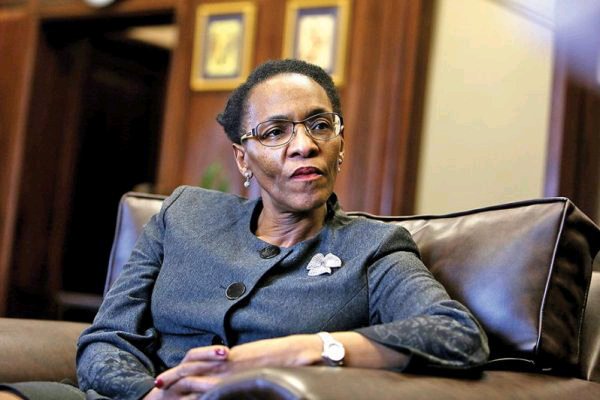
Chief Justice Mandisa Maya has come under intense public and political fire after the Constitutional Court once again failed to deliver its long-awaited judgment on the Phala Phala controversy, a delay that has ignited fresh accusations of bias and political shielding.
The case, which has lingered for months, centres on the 2020 theft of foreign currency from President Cyril Ramaphosa’s Phala Phala farm and the subsequent questions about how the incident was handled. Opposition parties, civil society groups, and sections of the public argue that the prolonged silence from the apex court is eroding trust in the judiciary at a time when transparency is crucial.
Critics, led by the Economic Freedom Fighters, have framed the delay as suspicious, claiming it conveniently protects Ramaphosa from accountability ahead of key political developments. Demonstrations outside the Constitutional Court this week saw protesters accusing Justice Maya of “playing for time” and undermining the public’s right to closure on a matter of national significance. Some activists described the delay as a “calculated strategy,” insisting that justice withheld is indistinguishable from justice denied.
Justice Maya has rejected any insinuation of bias, maintaining that the court is dealing with unprecedented caseloads, limited resources, and complex legal arguments that require meticulous attention. She insists the delay reflects systemic pressures rather than political interference, urging the public to allow the court space to deliver a sound and defensible ruling.
Despite these assurances, the growing impatience is unmistakable. Legal experts warn that prolonged uncertainty risks deepening perceptions of judicial inconsistency. For many South Africans, the Phala Phala ruling represents not just a verdict but a test of institutional integrity.
As tension mounts, the country waits to see whether the Constitutional Court can dispel doubts and deliver a judgment that restores confidence — or whether the controversy will continue to fuel speculation that the powerful remain insulated from consequence.


