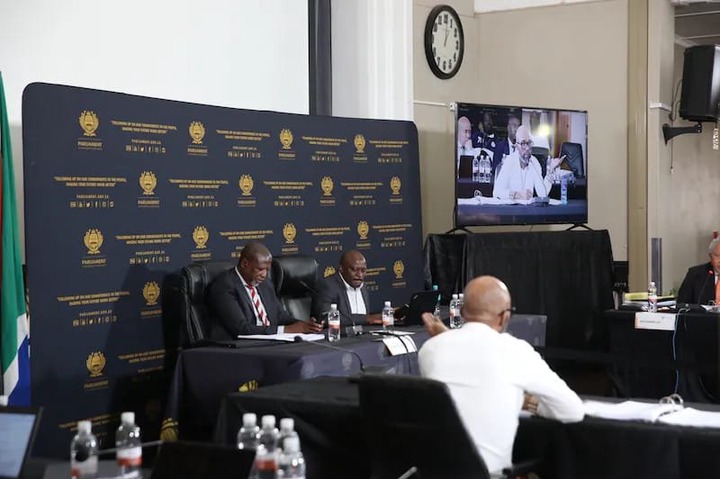
South Africa’s parliamentary investigation into explosive allegations made by KwaZulu-Natal police commissioner Lieutenant-General Nhlanhla Mkhwanazi has entered its final stage, with the ad hoc committee working towards submitting its final report to the National Assembly by 30 October 2026.
The committee has spent the past year examining allegations of political interference, corruption and possible criminal capture within the country’s criminal justice system. The inquiry was established following Mkhwanazi’s high-profile media briefing on 6 July 2025, during which he made serious allegations involving senior figures in law enforcement and government.
Public hearings began on 7 October 2025, with Mkhwanazi becoming the first witness to appear before the committee. Since then, MPs have heard testimony from a range of witnesses and considered evidence relating to some of the country’s most sensitive policing and political controversies.
The committee concluded its latest deliberations on the draft report on Wednesday, 7 October, after working through a document running to hundreds of pages. Reports indicate that MPs were still dealing with the final sections of the draft before moving towards the next stage of the process.
Among the contentious matters considered are allegations surrounding alleged cash payments involving businessman Vusimuzi “Cat” Matlala and former Police Minister Bheki Cele, the failure of former Crime Intelligence head Feroz Khan to appear before the inquiry, and questions surrounding MP Fadiel Adams’ alleged access to classified information.
The draft report will now be made available to individuals implicated in the findings, giving them an opportunity to respond before the final document is completed. According to reporting on the committee’s latest proceedings, those affected are expected to have three weeks to provide their responses.
Committee chairperson Soviet Lekganyane has indicated that MPs have attempted to distinguish between allegations supported by evidence and claims that do not meet the required threshold. The committee has also recommended further investigations in certain matters where it believes additional scrutiny may be necessary.
The final report is expected to become a significant parliamentary document, potentially influencing future investigations, accountability measures and reforms within South Africa’s criminal justice system.
With the 30 October deadline approaching, attention will now turn to how implicated parties respond to the draft findings and what recommendations ultimately reach the National Assembly.