
The South African Police Service is dealing with criminal syndicates that use spaza shops as fronts, as well as police officers who help them evade justice, senior officials have told parliament.
On Wednesday, top Saps management briefed the portfolio committee on police about interventions to combat gang-related violence. Saps emphasised that gang violence should not be treated as a standalone crime but as part of broader organised crime.
Major General Leon Rabie told the committee that gang-related violence intersects with drugs, firearm extortion, transport violence, hijacking and organised crime syndicates. He said criminal networks diversify and operate across multiple crime types at the same time. In provinces such as Western Cape, Gauteng, KwaZulu-Natal and Eastern Cape, gangs are evolving into structured criminal enterprises with national and international links.
Rabie said this increases their access to resources, firearms and logistical capacity, leading to more coordinated and violent activity. He also noted the corporatisation of gangs and an emerging trend of contract killings in the taxi, construction and political sectors.
Saps has proposed a comprehensive plan for Eastern Cape, Gauteng and Western Cape, including personnel, funding and training, with an estimated cost of R700 million. A skills enhancement plan and physical resourcing for mobility and technology are also included.
Rabie said anti-gang units focus on both investigation and prevention. Investigation targets gang structures, leadership, economic activities and serious violent crimes. Saps also stressed the need for multi-agency cooperation and community partnerships to build trust and improve information flow.
KwaZulu-Natal police commissioner Nhlanhla Mkhwanazi addressed concerns about low conviction rates. He said some criminals avoid conviction due to mishandling of evidence by police officers, and in some cases this is deliberate. He noted that all officers are trained in exhibit management under National Instruction 8 of 2017, but what is happening is a criminal act from within.
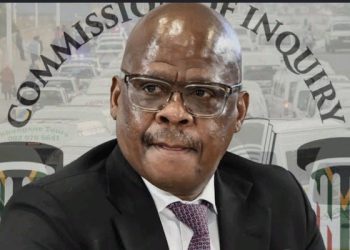
Mkhwanazi referenced testimony before the Madlanga Commission showing how officials have manipulated evidence handling at the highest level. He cited a recent KZN case where a district commissioner was suspended and two officers were dismissed after money went missing from storage.
On coordination, Mkhwanazi said Saps is trying to bring the National Prosecuting Authority and other stakeholders on board to speed up decision-making, similar to the IDAC model. He admitted that current coordination between Saps and the NPA faces challenges.
Regarding spaza shops, Mkhwanazi confirmed they are used as fronts for criminal activity. He said the low prices are not about making a profit but about justifying illicit operations. He added that police will conduct further analysis.