

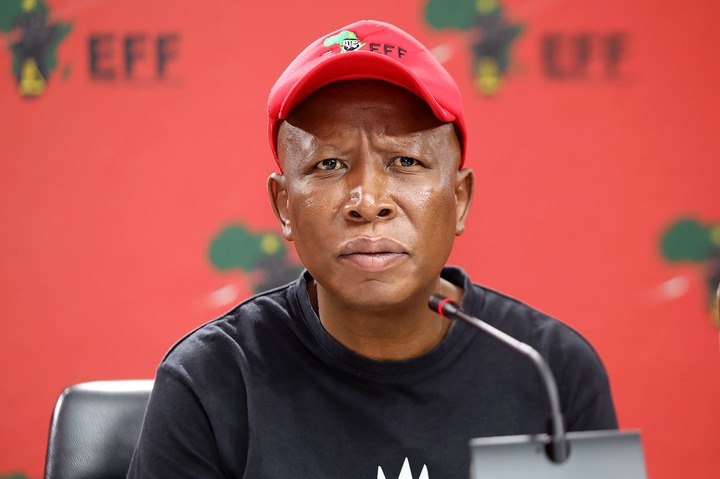
There is something deeply troubling about the growing hostility of the Economic Freedom Fighters towards sections of the media, according to writer Oliver Meth.
Meth argues that what is happening is no longer just frustration or political pushback, but a clear pattern of attacking journalists, questioning their credibility and trying to turn the public against them whenever coverage is not favourable.
He says the latest attacks aimed at Newzroom Afrika and political analyst Rebone Tau are not isolated. They form part of a longer history where journalists are painted as enemies and criticism is dismissed as bias.
On social media, Meth says this pattern has become even more aggressive, with prominent EFF members including Naledi Chirwa, Mazwi Blose and Sinawo Thambo pushing claims that certain media houses are running an anti-EFF agenda. He warns this creates a hostile environment where journalists are no longer seen as independent but as targets, and that once people are convinced the media cannot be trusted, accountability begins to collapse.
Meth writes that party leader Julius Malema has built his politics on confrontation, but what is happening now goes beyond strong debate. He says it is a deliberate strategy to weaken the media and silence criticism.
He points to past incidents, including the targeting of late journalist Karima Brown in 2018 after her private contact details were shared by the EFF, leading to threats and abuse. The party was later found to have incited harassment. He also notes that investigative outlets such as amaBhungane and Daily Maverick have been banned from EFF events after publishing critical stories.
Meth says Malema has publicly called for a boycott of the SMWX podcast by Dr Sizwe Mpofu-Walsh after commentary that did not align with the EFF’s position, showing a willingness to punish anyone who speaks critically.
He adds that social media is used to amplify these attacks, creating waves of outrage often built on weak claims and strong emotions.
Meth argues that if the EFF believes a journalist or media house has acted unfairly, there are proper channels through the Press Council or formal complaints. He says democracy works through public responses based on facts, not through intimidation or attempts to destroy people’s credibility.
He concludes that while the media must be held accountable when it gets things wrong, trying to destroy its credibility weakens democracy. He says when political leaders encourage supporters to attack journalists, they are protecting themselves from scrutiny, not protecting the public. He warns that no political party has the right to bully the media into silence, because when accountability falls, democracy follows.


