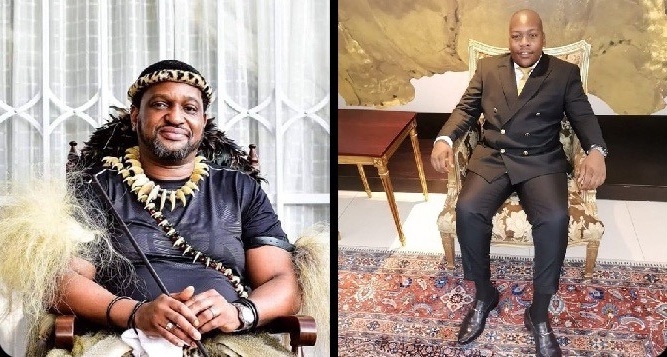
As the East London March draws to a close, royal leaders ignite debate about the end of politics as we know it.
Following recent events involving traditional leadership, a speech that was delivered earlier this year by King Misuzulu kaZwelithini has resurfaced in national discourse. This has raised questions about the possibility of a realignment of influence between the various royal houses in South Africa.
In January, the Zulu monarch issued a message that was both firm and symbolic. In it, he issued a warning that “something significant” was on the horizon, while also emphasising the Zulu nation’s unwavering presence and unity. In addition, he advocated for the elimination of the word “Natal” from the name KwaZulu Natal, a statement that was met with a variety of responses at the time and was, in some circles, disregarded by political leaders.
The recent events that have taken place in East London (uGompo) have, however, rekindled interest in the King’s statements. Ngizwe Mchunu, an activist, asserted that a delegation went to Komkhulu at the AmaRharhabe Royal House in order to request permission to take part in a march. The delegation claimed that they were acting in accordance with the Zulu King’s authority.
The Zulu and AmaRharhabe royal houses, whose leadership is connected through lineage, have historical and familial ties that have drawn attention to this development. These ties have been passed down through generations. This connection, according to observers, has the potential to serve as the foundation for increased cooperation between traditional authorities, which is particularly relevant at a time when discontent with political leadership appears to be growing among certain communities.
According to reports, royal structures were responsible for organising the march that took place in East London. During the march, Prince Xhantilesizwe Sigcawu expressed grievances on behalf of the attendees, including concerns regarding governance and service delivery. He expressed his dissatisfaction with the current state of the nation in a forceful manner, which reflected a more widespread sentiment of dissatisfaction among some citizens.
In spite of the fact that there has been a lot of talk about the possibility of traditional kingdoms working together more closely, political analysts warn against jumping to any hasty conclusions about the implications this could have for South Africa’s constitutional order.
Despite the fact that traditional leadership continues to play an important cultural and social role, any suggestion of fundamental political restructuring would require careful consideration within the framework of the Constitution, according to Thando Mbeki, a political analyst.
In spite of this, the events have brought to light a growing intersection between traditional authority and contemporary political discourse, with royal institutions increasingly expressing their opinions on matters pertaining to the nation.
Despite the fact that South Africa is currently facing ongoing socioeconomic and political challenges, the role of traditional leaders and the extent to which they have the ability to influence public sentiment continues to be a topic of intense interest. It is likely that in the coming months, it will become clearer whether the recent events indicate a more profound shift or whether they remain symbolic gestures.