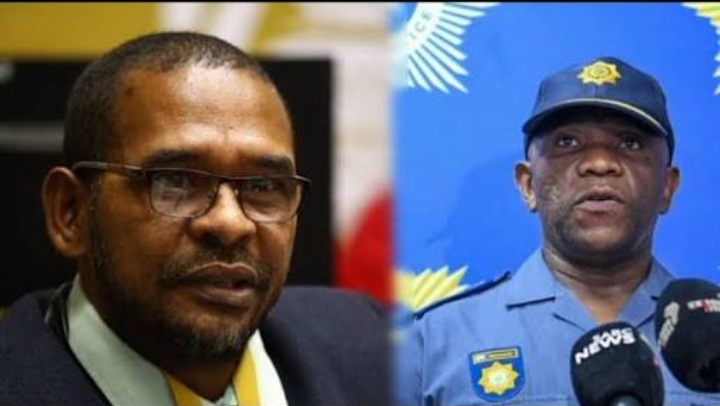
Member of Parliament Fadiel Adams has come out strongly against KwaZulu-Natal Police Commissioner Nhlanhla Mkhwanazi, criticising his recent public remarks and parliamentary testimony as unconvincing and lacking real substance.
Adams’ comments followed Mkhwanazi’s appearance before Parliament’s Ad Hoc Committee, where the commissioner raised concerns about organised crime networks and alleged irregularities within state institutions. While the presentation drew nationwide attention, Adams believes it fell far short of the level expected for such serious claims.
In a blunt response, Adams labelled both the press briefing and the committee session a “waste of time,” arguing that Mkhwanazi ultimately failed to provide solid proof. He accused the commissioner of relying on speculation rather than verifiable evidence, suggesting the presentation sounded more like a compelling narrative than a factual account.
The criticism has intensified political reactions to Mkhwanazi’s statements, which have already sparked debate about the influence of organised crime within South Africa’s justice system. While some voices are calling for further investigation into the issues raised, Adams insists that the way the information was delivered weakens its credibility.
He went further to describe the situation as “farcical,” claiming that Mkhwanazi appeared to retreat from some of his earlier assertions under pressure. According to Adams, these inconsistencies raise doubts about both the reliability of the testimony and the intentions behind it.
In a particularly sharp remark, Adams dismissed the commissioner as “a very good salesman, not a very good general,” highlighting the growing divide in how political leaders are interpreting the matter.
Supporters of Mkhwanazi, however, argue that his testimony should be seen as a starting point for deeper investigation rather than a final verdict. They maintain that raising concerns is often the first step toward uncovering wrongdoing.
The ongoing dispute underscores the tension between political oversight and law enforcement leadership, especially when dealing with sensitive issues like corruption and organised crime. As the Ad Hoc Committee continues its work, attention will likely turn to whether further evidence emerges to either support or challenge Mkhwanazi’s claims—and what consequences may follow.