

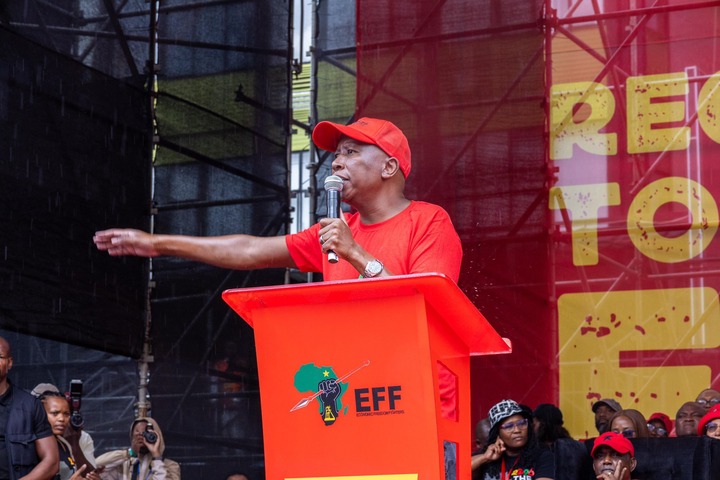
Economic Freedom Fighters (EFF) leader Julius Malema has publicly criticised KwaZulu-Natal Police Commissioner Nhlanhla Mkhwanazi, labelling him a “coward” and vowing not to be intimidated amid mounting allegations raised at a national inquiry.
Malema made the remarks over the weekend during the party’s registration rally in Johannesburg, where he addressed supporters on what he described as politically motivated attacks aimed at undermining his leadership and the EFF.
The comments follow testimony at the Madlanga Commission of Inquiry, where Sergeant Fannie Nkosi alleged that Malema had attempted to influence tender processes. The claims, which have not yet been tested in court, have added a new dimension to ongoing scrutiny around political influence and procurement systems in South Africa.
Responding directly to the allegations and the perceived role of Mkhwanazi, Malema dismissed the accusations as baseless and politically driven. He accused the commissioner of attempting to use state institutions to exert pressure on him, asserting that such tactics would not succeed.
“I will not be blackmailed by anyone,” Malema told supporters, reinforcing his stance that he remains unshaken by the developments. He further suggested that the timing of the allegations raises questions about intent, particularly as the EFF intensifies its mobilisation efforts ahead of upcoming political engagements.
The office of Commissioner Mkhwanazi has not publicly responded to Malema’s remarks. Meanwhile, the inquiry continues to hear testimony from various witnesses as it seeks to establish facts around alleged misconduct and governance failures.
Political analysts note that the exchange highlights growing tensions between political figures and law enforcement authorities, particularly in cases involving allegations of corruption and influence over state resources. They caution, however, that the claims remain unproven and stress the importance of due process.
The EFF has also reiterated its support for Malema, describing the allegations as part of a broader campaign to discredit the party. Supporters at the rally echoed this sentiment, framing the situation as a test of political resilience.
As proceedings at the commission continue, attention is expected to remain firmly on both the credibility of the testimony presented and the responses from those implicated. The outcome could carry significant implications for public trust in institutions and the broader political landscape.


