
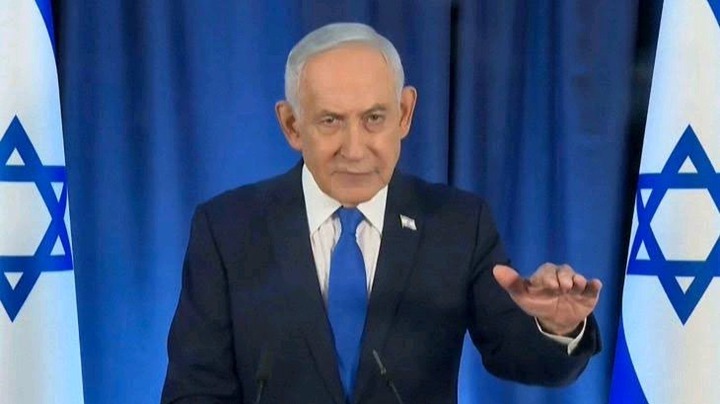
In response to widespread rumours on social media that the Israeli leader had been murdered in vengeance for recent military attacks carried out by Israel and the United States against Iran, the Office of Benjamin Netanyahu has categorically refuted these claims.
It was alleged that the Israeli prime minister had been murdered as a result of an escalation in hostilities in the Middle East, and the rumours quickly spread across a number of different online sites. However, officials from Netanyahu’s office promptly refuted the reports, labelling them as incorrect and misleading information. They also stated that they were not true.
In response to a request for comment, representatives from the Prime Minister’s Office provided a response that was succinct but unwavering.
According to the statement made by the office, “These are fake news; the Prime Minister is fine.”
A period of increased geopolitical tension involving Israel, Iran, and the United States coincided with the beginning of the trending of the misinformation regarding the internet. Recent military advancements and rhetoric of retaliation between the countries have fuelled speculation and panic, creating a situation in which allegations that have not been validated can spread rapidly.
There has been no reliable government, intelligence, or international media source that has reported any attempt or attack on Netanyahu, despite the claims that have gone viral. It has been confirmed by Israeli officials that the Prime Minister is still alive and in good health, and that he is continuing to carry out his responsibilities as the Head of Government.
The quick spread of the myth, according to analysts, demonstrates the growing importance that information warfare and deception play throughout global confrontations. In times of crisis, it is possible for false narratives to spread further and further before authorities or sources that have been vetted are able to respond.
The specialists in the field of media believe that these kinds of disinformation efforts are frequently used with the intention of causing uncertainty, undermining political leadership, and inflaming tensions between competing nations.
The geopolitical expert Daniel Katz stated that periods of war provide an environment that is conducive to the spread of false information. False stories regarding the death or assassination of national leaders are a popular strategy that is used to disrupt public perception and create emotional responses from the general public.
In order to avoid spreading or exaggerating the extreme claims that are circulating online, officials have advised the general people and media outlets to rely on information that has been validated and obtained from reliable sources.
The event serves as a timely reminder of the significance of critical verification and the appropriate dissemination of information, particularly during times of increased tension on a global scale.
Observers are warning that as the geopolitical confrontation between Israel, Iran, and the United States continues to develop, it is likely that misleading news and digital propaganda will continue to be a persistent concern in the current information landscape.