

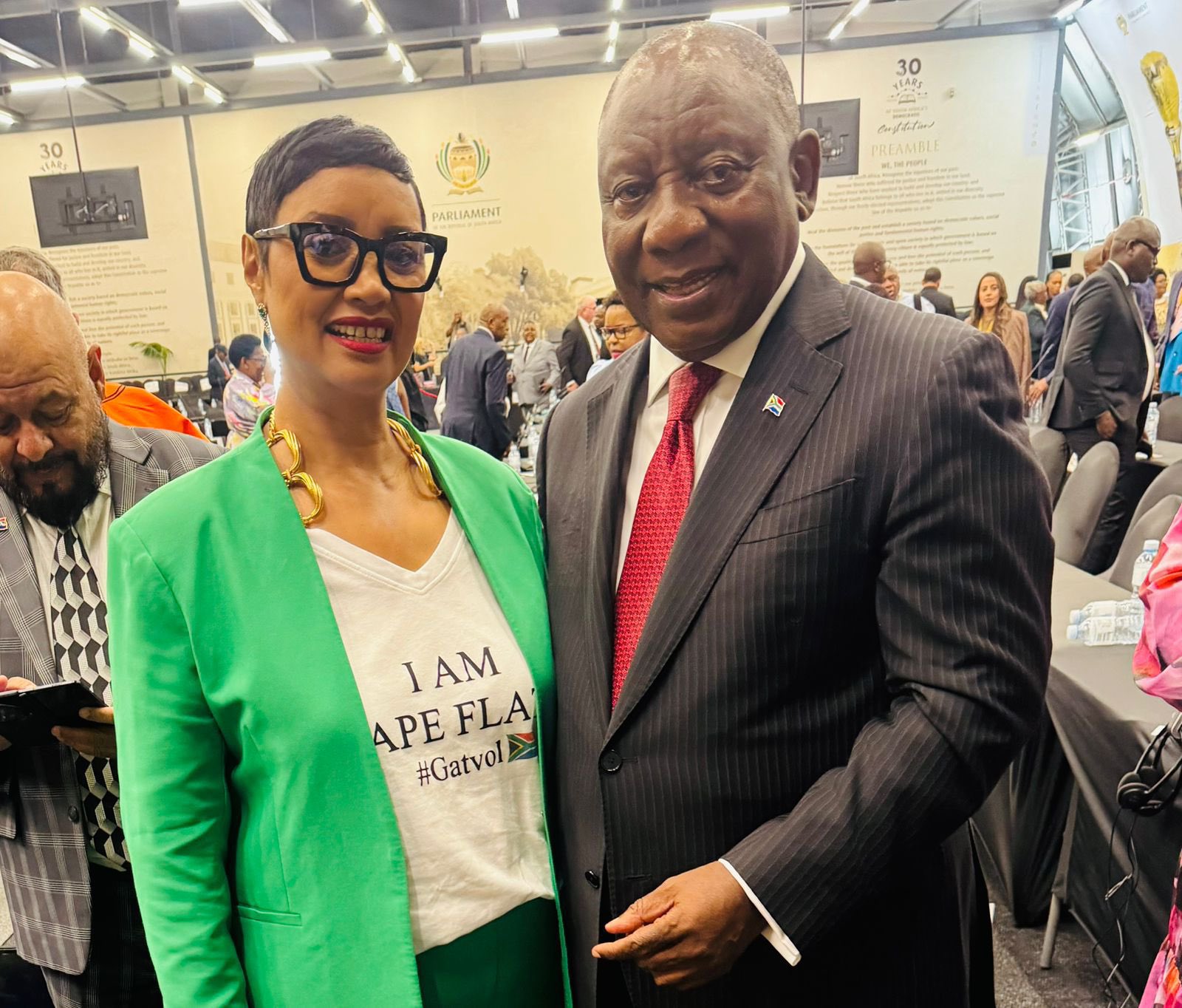
Online platforms were filled with debate this week after a photo of Cyril Ramaphosa standing alongside Dereleen James began circulating widely. The image, showing the President smiling next to James, prompted strong reactions across the political spectrum. Some commentators questioned the optics of opposition representatives being photographed with the head of state, suggesting it could be interpreted as an attempt to gain visibility or approval.
The conversation escalated when one social media user posted a remark implying that certain opposition MPs were seeking validation by associating themselves with the President, describing him as “the President of the people.” The comment quickly drew attention and added fuel to an already heated discussion about political symbolism and public perception.
You want attention, I’ll give you!
If only you knew, your President actually stopped me and asked for a picture. Unfortunately he cannot do the same with you, you bring shame to his name and this country. Gaan le!
Days of pussyfooting around thief’s are over.— Dereleen James MP (@DereleenJ) February 19, 2026
James responded firmly to the criticism. In a post that was widely shared, she rejected the suggestion that she had sought out the photo for political gain. She stated that it was the President who initiated the interaction and requested the picture. Her reply included pointed language directed at her critic, accusing them of misrepresenting the situation and defending her stance strongly. The response attracted significant engagement, with many users praising her for addressing the claim directly rather than ignoring it.
The exchange gained momentum on X and other digital platforms, drawing thousands of comments and reactions. Supporters viewed James’ response as a clear rebuttal to what they saw as an unfair narrative, while others felt her tone added to the already tense political climate.
Observers note that the incident demonstrates how quickly a single photograph can shape public debate. In South Africa’s highly polarised political environment, brief encounters between public figures can rapidly evolve into broader discussions about loyalty, perception and accountability, largely driven by the speed and reach of social media.


