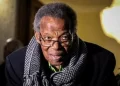
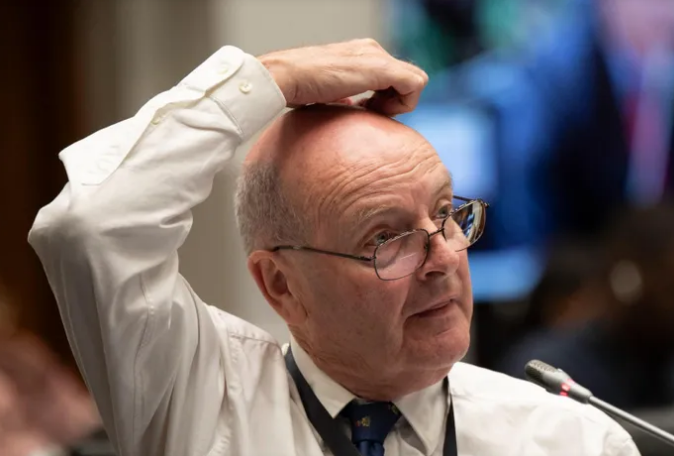
After modifying his earlier allegations about training that was offered to President Cyril Ramaphosa, forensic investigator Paul O’Sullivan left members and observers startled during the sessions of the Ad Hoc Committee of Parliament. This dramatic change of events occurred over the course of the hearings.
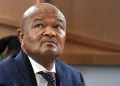
On Tuesday, O’Sullivan emphasised that he had never educated Ramaphosa or any other top official on the Constitution itself. Previously, he had implied that he was involved in constitutional training for senior officials. These statements were made in response to O’Sullivan’s previous statement. O’Sullivan stated to the committee that he did not possess the necessary qualifications to instruct anyone on the Constitution. In his explanation, he stated that his work was restricted to the Bill of Rights, and that any previous utterances that led one to believe otherwise were inaccurate.
There was an immediate uproar in the committee room as a result of the disclosure. During O’Sullivan’s explanation of the difference between basic constitutional issues and the specific rights that are detailed in the Bill of Rights, members of parliament exchanged astonished glances with one another. He emphasised that his expertise was limited to the Bill of Rights and did not extend to education on the Constitution in its broader sense.
AD HOC COMMITTEE | Paul O’Sullivan confirms, “I had no qualification to train anybody in the Constitution.” He adds he did not train Cyril Ramaphosa and others in the Constitution, but in the Bill of Rights. pic.twitter.com/XldLOgA9dA
— SABC News (@SABCNews) February 10, 2026
In light of the political significance of O’Sullivan’s statements, the Ad Hoc Committee, which was conducting an investigation into charges of corruption, political involvement, and irregularities within the justice system, had requested clarification on O’Sullivan’s assertions. His prior utterances, which suggested that he had trained President Ramaphosa, had caused eyebrows to be raised due to the sensitive nature of the President’s grasp of constitutional obligations.
Several members put pressure on O’Sullivan to provide additional information regarding the nature of his training and the officials who were engaged. In spite of the fact that he had offered advice on a few fundamental rights, he affirmed that this did not constitute comprehensive constitutional education.
Those who were observing the situation noticed that the clarification represented a significant change in the narrative, particularly for members of the opposition who had previously highlighted O’Sullivan’s previous remarks as proof of possible government overreach. Despite the fact that doubts remain regarding the influence of his earlier words on public perception, it is anticipated that the correction will have an effect on the investigation being conducted by the committee.
Through the act of retracting his claim that President Ramaphosa had received constitutional training, O’Sullivan added an additional layer of complication to a parliamentary investigation that was already fraught with tension. Several members of the committee have said that they will carefully examine his testimony and evaluate the implications it may have for the larger investigation into allegations of misconduct within the justice system.
The latest disclosure has brought to light the difficulties that Parliament encounters when attempting to differentiate between high-profile assertions and the true breadth of expert testimony. At this point, all eyes are focused on how this most recent revelation will influence both the investigation and the public debate on governance and accountability.