

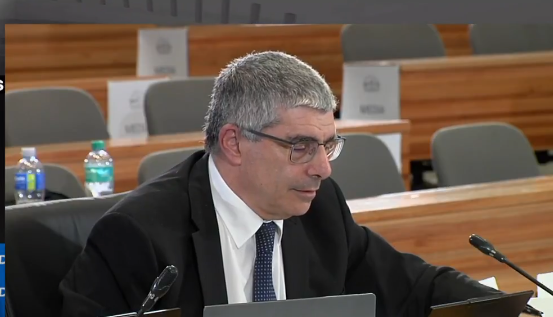
The Madlanga Commission has just deployed perhaps its most devastating piece of evidence yet: an actual voice note from Vusimuzi “Cat” Matlala sent directly to Witness F, played aloud for all to hear. Whatever claims, denials, and characterizations have been offered about the nature of relationships, the seriousness of firearms discussions, or who was “just entertaining” whom now face the ultimate test—Matlala’s own recorded voice, preserved in digital format, speaking directly to the witness about matters that all parties have been attempting to minimize, explain away, or deny outright.
Voice notes represent a particularly damning form of evidence in the modern digital age. Unlike written messages that can be claimed as jokes, misunderstood, or taken out of context, a voice note captures tone, urgency, emotion, and intent in ways that are nearly impossible to misrepresent. When the commission plays Matlala’s actual voice discussing whatever he discussed with Witness F, every claim about innocent banter or casual entertainment gets tested against the reality of how people actually sound when they’re serious versus when they’re genuinely just playing around.
The fact that this voice note exists and has been obtained by the commission suggests several important things. First, Witness F either voluntarily provided it to investigators or it was recovered from seized devices during the investigation. Either scenario indicates the evidence chain has access to communications that participants might have assumed were private or ephemeral. Second, the commission’s decision to play it publicly rather than just referencing it suggests the content is sufficiently damning that hearing Matlala’s actual words will advance their investigation more effectively than paraphrasing ever could.
For Matlala, having his own voice played at the commission represents a nightmare scenario he presumably thought he’d avoided. Throughout the extensive testimony about his relationships with Major General Senona, the business dealings with Senona’s son, the requests for ministerial phone numbers, the VIP protection company, and now the firearms discussions with Witness F, Matlala himself hasn’t had to testify. He’s been a ghost haunting the proceedings—discussed extensively but never directly confronted. The voice note changes that dynamic by making him present in his own words, unable to deny or reframe what he said because everyone can hear it exactly as he delivered it.
What the voice note actually contains becomes the critical question. Is Matlala discussing weapon specifications and quantities that confirm the bulk importation scheme Witness F described? Is he negotiating prices or delivery terms that prove these weren’t idle conversations? Does his tone convey urgency or business-like seriousness that contradicts claims of entertainment? Or perhaps most explosively, does he reference the Deputy President’s nephew, political connections, or ability to facilitate importation through channels that his law enforcement relationships could enable?
The voice note’s content might also reveal Matlala’s understanding of the legal risks involved in what they were discussing. Did he acknowledge the need for discretion, warn about law enforcement, or discuss methods to avoid detection? Such statements would demonstrate consciousness of guilt—awareness that the activities being planned were criminal and required concealment. This transforms discussions from potentially innocent business planning into clear evidence of criminal conspiracy.
For Witness F, hearing this voice note played publicly must create extraordinary psychological pressure. Whatever story he’s constructed about merely entertaining conversations or lacking serious intent now confronts the reality of what Matlala actually said to him. If the voice note contradicts Witness F’s characterization of their discussions, his credibility collapses entirely. If it confirms his account, he faces the different problem of explaining why he engaged with criminal proposals even if he claims he never intended to follow through.


