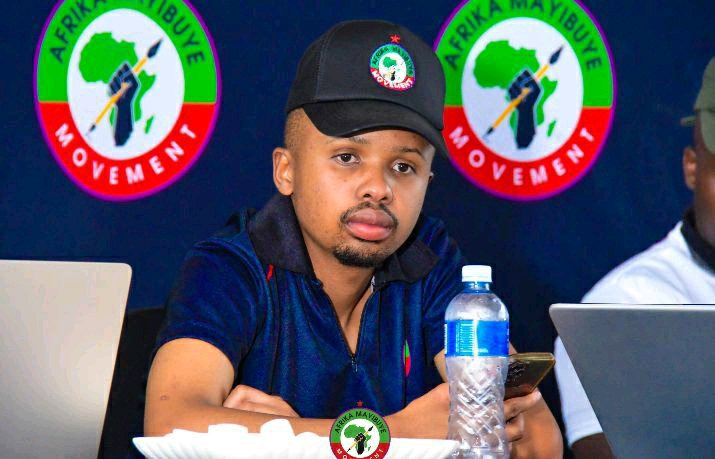
Due to the fact that he has been financially excluded and has not received the support he requires in order to complete his education, a young leader in the Mayibuye group has decided to resign from his position. When Mkhanyisi Mbangata presented his resignation as Student President after completing his undergraduate studies, he stated that he was unable to register for his Honours degree due to financial constraints. He stated that this was the reason for his decision. In a statement that followed his resignation, Mbangata conveyed his extreme grief and displeasure with the choice that was made.
“I am formally resigning from my position as Student President, effective immediately. Congratulations!” “Following the completion of my undergraduate degree, I was unable to register for my honours degree due to financial difficulties,” he added. The departure of Mbangata has given rise to questions about the legitimacy of the Mayibuye structure’s commitment to the education and empowerment of young people for the purpose of empowering them.
Others have stated that his tale demonstrates how there is a mismatch between what politicians claim they will do and what young leaders truly require when they are having financial difficulties. According to others who are familiar with the case, the bare minimum amount of money that Mbangata required to finish his registration for his honours program was approximately three thousand rand. They claim that he was forced to step down from his role as leader and put his studies on hold since, despite the fact that he made several requests for assistance, he did not receive any for his efforts.
Additionally, Plot Mahonisi Shivambu, a prominent man who is connected to the Mayibuye hierarchy, has been the subject of investigation. Critics claim that Shivambu did nothing to assist Mbangata, despite the fact that he was aware of her predicament. As of the date of publication, the leadership of Mayibuye has not issued any official comment in regard to the claims or any other official declaration. Some people have drawn parallels between this situation and the one that occurred with Queen Nolubabalo, another young figure who was subjected to criticism at the time for what they saw to be a lack of institutional support.
According to advocates, the similarities between the two occurrences demonstrate a pattern in which underprivileged youngsters are symbolically honoured but discarded when they seek actual assistance. Individuals who fight for education believe that financial exclusion is a significant barrier to obtaining a higher education. In particular, this is the case for students who come from households with modest incomes. According to them, organisations and leaders who assert that they are champions of youth development have a responsibility to provide help that is both efficient and timely in order to support their allegations.
Mbangata’s departure has reignited questions regarding responsibility, educational opportunities, and the true cost of failed youth promises. These questions have been brought to the forefront once again. Many people will be keeping a close eye on the Mayibuye structure to determine whether or not it takes action in response to the increasing number of calls for reform and openness, or whether or not it allows the issues to remain unaddressing.