
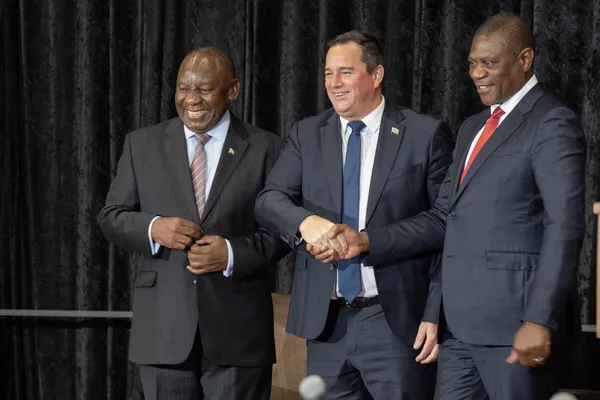
This marks a big turning point for South Africa’s main opposition party, the Democratic Alliance (DA), and it also sets the stage for a leadership transfer at a crucial political juncture. John Steenhuisen, the head of the DA, has officially resigned from his position today.
Steenhuisen’s management of the Democratic Alliance (DA), which he assumed in the midst of internal strife and increasing electoral pressure, has come to an end as a result of the declaration, which was confirmed by top party leaders. After months of speculation over his future, which was fanned by discussions inside the party over strategy, leadership style, and the DA’s success in recent elections, he finally decided to step down from his position.
When Steenhuisen became head of the party, he was given the responsibility to stabilise the organization and widen its appeal beyond its traditional support base. Steenhuisen rose through the ranks of the party after serving as Chief Whip in legislature. While he was in charge, the Democratic Alliance (DA) established itself as a staunch opponent of the African National Congress (ANC), which was in power at the time. The DA’s primary concerns were governance, corruption, and the provision of services.
However, his leadership was not without its share of political turbulence. Despite the fact that there were ongoing conflicts within the party regarding the direction of policy, coalition politics, and the identity of the party, some members called for the party to undergo a renewal and adopt a new strategy in order to reconnect with voters. The results of elections in major metropolitan areas and across the country further increased the level of scrutiny directed on the leadership of the party.
After his departure, Steenhuisen issued a statement in which he expressed his gratitude to the members of the Democratic Alliance (DA) and his supporters. He also stated that it had been an honour to lead the DA during a difficult time in South African politics’ history. His confidence that the party will continue to play a major role in holding the administration accountable was voiced despite the fact that he acknowledged the challenges that came with the responsibility.
In the coming days, it is anticipated that the DA will present a clear framework for electing a new leader as well as an interim leadership arrangement before the election. The changeover will be widely monitored, according to political analysts, because it will determine the path that the party will take up until the next elections and how it will approach coalition governing.
The departure of Steenhuisen starts a new chapter for the District Attorney’s Office, which brings with it both chances and risks. The party has the opportunity to reset, resolve internal complaints, and reframe its message to South Africans when it undergoes a leadership change. However, this change can also create a greater degree of internal uncertainty.
The focus will now move to who will take the reins and how the party intends to reinvent itself in a political landscape that is becoming increasingly competitive and fractured. This transition will coincide with the beginning of the Democratic Alliance (DA) changeover.