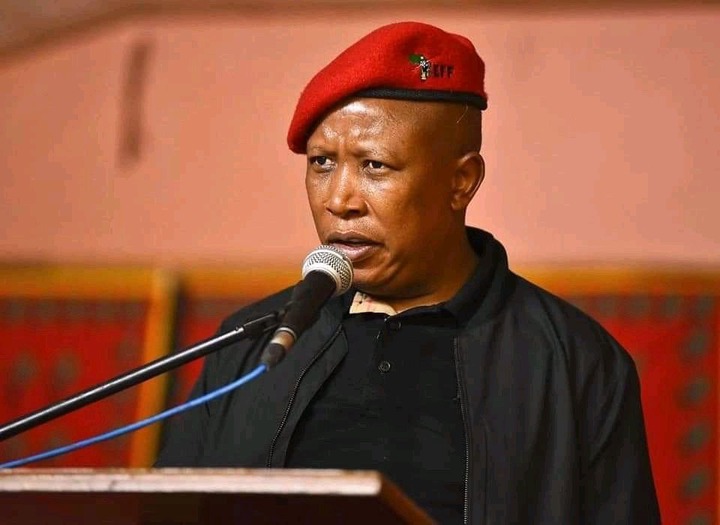
Julius Malema, the head of the Economic Freedom Fighters, has issued a highly contentious message that appears to address a personal foe. The speech was initially distributed on social media and has since gained widespread attention. An individual who has supposedly gone away was described by the political figure using strong language, as said in a post on the site. The post also suggested that the deceased had previously been afforded unjust protection. The comments were reportedly addressed at a critic who was found dead in a hotel in Sandton not too long ago. The hotel was located in South Africa. This sudden public declaration has garnered a large amount of attention due to the fact that it is quite confrontational and the timeliness of the events that have been recounted.
It is thought that the person who was the focus of these remarks was a popular user of social media named Goolam Vawda. Vawda was well-known for his continuous and vociferous criticism of the political leader. According to reports, the dead individual had a history of running public campaigns using a variety of digital media with the intention of bringing the politician into disrepute before the public. According to the allegations, these acts included the spreading of content that was defamatory and speech that was violent. The statement made by the politician has a metaphorical allusion to pain, and it implies that if certain historical protections were not in place, then other individuals who engaged in similar behavior may face outcomes that are identical to those that they experienced.
According to the circumstances surrounding this occurrence, there has been a pattern of conflict between the political leader and his digital critics for a considerable amount of time. Numerous individuals have, in the past, utilized social media platforms in order to exert influence over public opinion against political figures, which has resulted in both legal and personal conflicts. The politician has asserted on multiple occasions that these initiatives were a component of a larger, more comprehensive effort to damage his power and character. A deep-seated hostility that continues to exist between the leader and those who have previously opposed his public status has been brought to light by the leader’s interpretation of the recent death of his critic as a type of karmic punishment.
There has been a range of responses from the general public to the message, with some individuals pointing out that the language used during a period of mourning was not particularly gentle. Despite the fact that the politician’s supporters frequently consider such forthrightness to be an indication of strength, other people have expressed concerns regarding the ethical implications of gloating over a death. The lawmaker has not withdrawn his words, nor has there been an official legal reaction to the post, despite the intensity of the vitriol that has been used. In this day and age, the scenario serves as a sharp reminder of the hazardous junction that exists between political leadership and the unfiltered nature of conversation on social media platforms.