

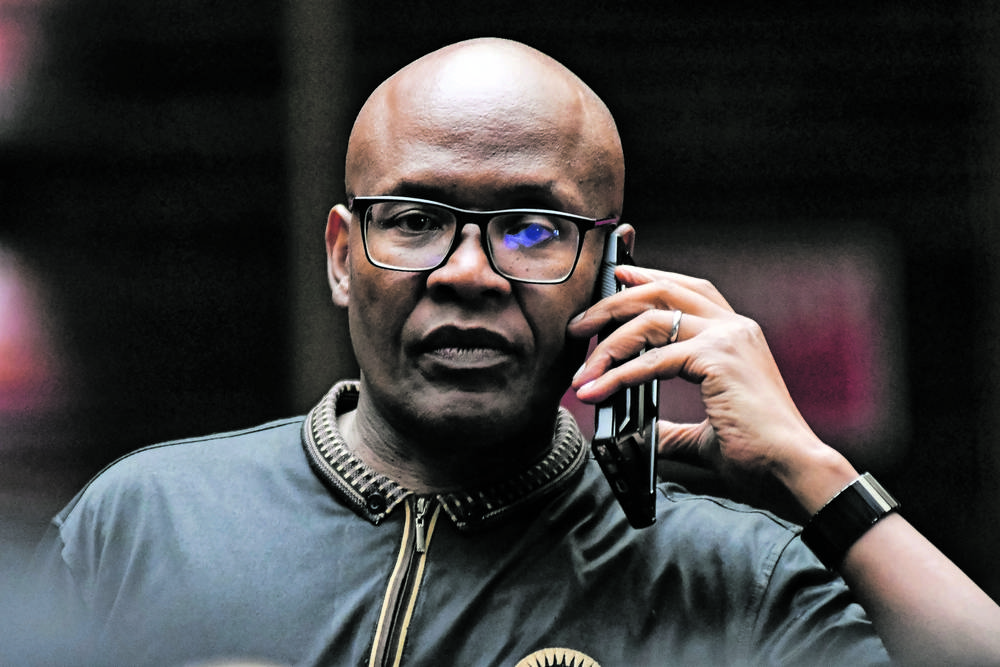
Political commentator and former government spokesperson Mzwanele Manyi has declared “game over” for Major-General Lesetja Senona, claiming that recent developments have fully exposed what he describes as deep-rooted rot within senior law enforcement ranks. In a strongly worded post on X, Manyi accused Senona of failing in a high-stakes attempt to shield another senior officer, General Sibiya, from serious allegations involving the alleged misuse of state resources.
According to Manyi, Senona’s credibility took a major blow after he allegedly tried—and “failed spectacularly”—to protect Gen Sibiya from claims that he used a state vehicle to collect R2 million in Sandton. The money, Manyi alleges, was collected from a known and controversial individual and was intended to pay for a private plot. While these allegations have not yet been tested in court, the assertion has intensified public scrutiny around senior SAPS leadership.
Manyi’s remarks come amid growing controversy surrounding evidence and testimony emerging from commissions and public platforms, where senior police officials have increasingly found themselves under the spotlight. For critics, the alleged use of a state vehicle for private financial transactions represents a glaring abuse of power and public resources, striking at the heart of ethical policing and accountability.
“The rot is now fully exposed,” Manyi wrote, suggesting that recent events mark a turning point. His comments echo sentiments expressed by analysts and civil society groups who argue that South Africa’s criminal justice system has long struggled with internal accountability at senior levels. They say that each new allegation chips away at public trust, particularly when they involve figures tasked with upholding the law.
Observers note that Senona’s name has already surfaced repeatedly in controversial contexts, with critics questioning his judgment and leadership. The claim that he attempted to defend or shield Gen Sibiya from damaging allegations has further fuelled perceptions of a protective culture within senior ranks, where accountability is allegedly resisted rather than enforced.
Legal experts caution that allegations alone do not equate to guilt and stress the importance of due process. However, they also argue that the seriousness of the claims demands transparent investigation and clear answers. “When allegations involve state vehicles, large sums of cash, and senior officials, the threshold for explanation is extremely high,” one analyst said.
The reference to Sandton and a R2 million cash collection has particularly alarmed commentators, given South Africa’s ongoing fight against corruption and illicit financial flows. Questions are now being asked about how such transactions could allegedly take place without immediate red flags or intervention.
For Manyi, the trajectory is clear. He described the situation as “downhill from here,” implying that further revelations could follow and that the pressure on Senona is unlikely to ease. His post has since sparked widespread debate online, with some echoing his assessment while others urge restraint until formal investigations conclude.
As public confidence in law enforcement remains fragile, the allegations and reactions surrounding Senona and Gen Sibiya highlight the broader crisis facing the criminal justice system. Whether these claims lead to formal charges, disciplinary action, or official probes remains to be seen. What is clear, however, is that the spotlight on senior SAPS leadership is intensifying—and the demand for accountability is growing louder by the day.


