
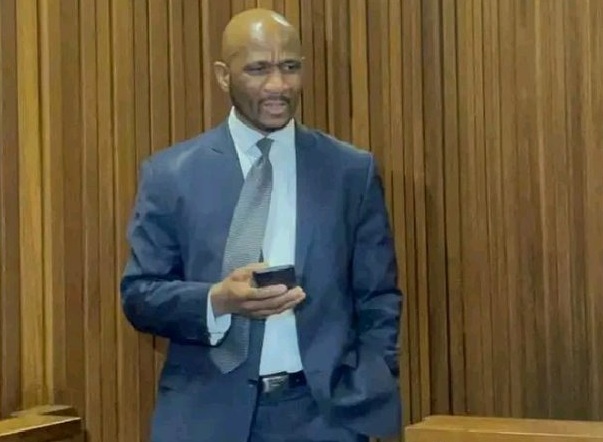
Advocate Malesela Teffo has issued a stern warning that is already resonating throughout South Africa’s political and law enforcement spheres, asserting that “corrupt police officers” and “corrupt politicians” should anticipate exposure following his appointment as head of intelligence at the civic advocacy organization FOSA.
In his typically forthright manner, Teffo stated that his new role would concentrate on dismantling what he characterized as deeply embedded corruption networks that have prospered through concealment, intimidation, and political safeguarding. “Those who assume they can persist in misappropriating public resources or misusing state authority without facing repercussions are mistaken,” he stated. Their period of clandestine activity is coming to an end.
Although FOSA is a relatively obscure civic organization, Teffo’s appointment has immediately enhanced its prominence. Renowned for his courageous legal advocacy and readiness to challenge influential interests, Teffo introduces both credibility and controversy to the role. Supporters regard him as an essential catalyst for change; critics accuse him of engaging in self-promotion. Teffo, nonetheless, remains steadfast.
According to him, the intelligence unit under his command will prioritize intelligence collection, protection of whistle-blowers, and the strategic disclosure of corruption. This is not a matter of hasty accusations, he stated. It concerns facts, evidence, and accountability. If you are pure, you have no cause for concern. If you are engaged in corruption, your time is rapidly diminishing.
Teffo also conveyed a message to the general public, encouraging them to take an active role in the eradication of misconduct. He urged professionals within the public and private sectors to come forward with information, assuring confidentiality and legal assistance wherever feasible. “Authentic change does not originate from silence,” he stated. It manifests when individuals refuse to be cowed.
Political analysts suggest that Teffo’s actions may exert renewed pressure on institutions frequently criticized for their sluggish or selective responses to corruption. Although FOSA does not possess the financial resources of larger civil society organizations, its strategy seems to depend on astute intelligence efforts, public advocacy, and legal action.
It remains to be seen whether Teffo’s warning will be followed by substantive action. What is evident, however, is that his appointment has caused unease among those acclimated to functioning without oversight. For both allies and adversaries, the message is clear: the era of covert corruption is under scrutiny, and the confrontation is now taking place publicly.