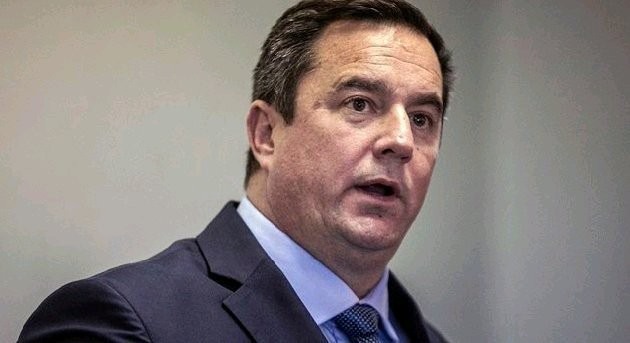
Democratic Alliance (DA) leader John Steenhuisen has sparked controversy by questioning the historical understanding of members of the MK party regarding uMkhonto weSizwe (MK), the armed wing of the African National Congress (ANC).
In a recent address, Steenhuisen emphasized the importance of accurately interpreting South Africa’s liberation struggle. He argued that many MK members have misrepresented the organization’s legacy, leading to a skewed narrative that oversimplifies its role in the fight against apartheid.
“The real uMkhonto weSizwe was not merely a militant group; it was a response to systemic oppression and violence,” Steenhuisen stated. He criticized the MK party for seemingly romanticizing aspects of the armed struggle without acknowledging the complexities involved.
Steenhuisen’s comments come amidst rising tensions between political parties in the wake of ongoing discussions about reconciliation and the legacy of the apartheid era. He urged MK members to engage in a more nuanced conversation about their history, highlighting the necessity of understanding both the triumphs and tragedies of the past.
Political analysts note that Steenhuisen’s remarks could ignite further debate about the legacy of the ANC and its armed struggle, particularly among younger South Africans who are increasingly interested in the country’s historical narratives.
As the DA positions itself as a progressive alternative, Steenhuisen’s challenge reflects a broader push for accountability and critical engagement with South Africa’s history. The MK party has yet to respond formally to these claims, leaving many to speculate on the implications for inter-party dynamics.
This confrontation underscores the ongoing dialogue about memory, identity, and political legitimacy in post-apartheid South Africa, a discussion that remains as vital today as it was during the liberation struggle.