
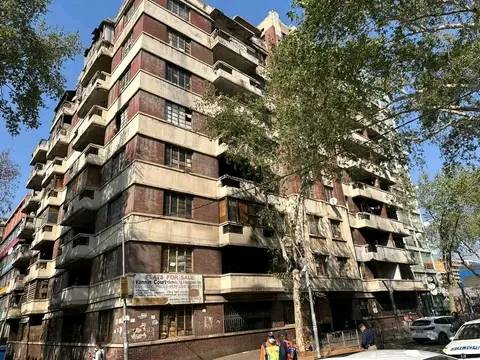
𝗛𝗜𝗝𝗔𝗖𝗞𝗘𝗗 𝗕𝗨𝗜𝗟𝗗𝗜𝗡𝗚𝗦 𝗔𝗥𝗘 𝗔 𝗚𝗢𝗟𝗗 𝗠𝗜𝗡𝗘
What many South Africans do not realise is that a large number of buildings in the country’s major cities—particularly Johannesburg, Randburg, and Pretoria—are owned by German and Dutch businesspeople who now live in Cape Town or Europe. Since leaving South Africa, many of these owners no longer maintain their buildings and fail to pay municipal rates or electricity to councils.
To maximise profits, most owners employ mainly Zulu or Sotho gangs (commonly referred to as AmaRussia) to pose as building hijackers. This arrangement allows the owners to distance themselves from responsibility and avoid paying rates and electricity. These “hijackers,” who effectively act as agents of the foreign-based owners, then subdivide two- or three-bedroom flats into 10 to 15 cubicles using curtains or wooden partitions. A single sitting room can be converted into four or five cubicles. Some buildings are also turned into brothels, where women sharing rooms are charged up to R200 per day, or about R18,000 per room per month.
The gangs illegally bridge electricity from City Power infrastructure or neighbouring buildings, and the cubicles are then rented out—mostly to foreign nationals working menial jobs—for between R800 and R1,000 per month/cubicle.
In essence, owners pay enforcers to transform their properties into shack-like slums or “curtain hotels,” where a three-bedroom flat in Hillbrow can generate between R14,000 and R18,000 per month.
Zulu or Sotho gangs act as rent collectors and enforcers, but they are themselves monitored by violent private security companies, many owned by former white South African police officers. These security companies also maintain relationships with separate Zulu and Sotho gangs that are reportedly used to eliminate hijackers or agents who no longer serve the owners’ interests.
The bulk of the money collected from these buildings is sent back to the owners in Cape Town or Europe, who pay no municipal rates, electricity, or estate agents to manage the properties.
When owners later decide to sell, they often instruct lawyers to claim that their buildings were hijacked. This results in municipal councils scrapping accumulated rates debt, after which the owners regain control of the buildings. The properties are then bought by entities such as Joburg Property Company, refurbished, and the cycle begins again on another building.
There are reports that some Zulu taxi owners have caught on to this model and have begun pooling their money to purchase old buildings and replicate the same system.
In buildings with as many as 400 flats, monthly collections can reach up to R5.6 million without paying for maintenance, electricity or rates. Hijacking buildings and turning them into slums is far more lucrative than managing them as well-maintained, law-abiding, rate paying properties. This is the economic logic behind building hijackings. It’s a money spinner.