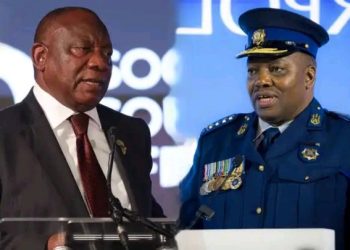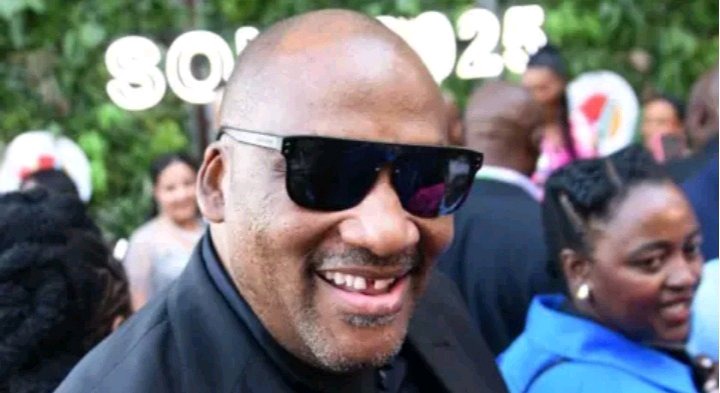
Sports, Arts and Culture Minister Gayton McKenzie has reaffirmed his robust support for the Government of National Unity (GNU), asserting that it is effectively achieving job creation, economic stability, and maintaining historically low inflation rates. In a recent statement extensively circulated on social media by MDN News, the leader of the Patriotic Alliance (PA) underscored the coalition’s unity and assured that President Cyril Ramaphosa will serve in office until the conclusion of his term in 2029.
McKenzie, a prominent member of the multi-party GNU established following the 2024 elections, emphasised favourable economic indicators during Ramaphosa’s tenure. He cited the creation of nearly 300,000 employment in the third quarter, a strengthening rand, and inflation at its lowest levels in years as evidence that South Africa has “turned the corner.” The GNU remains cohesive and committed to serving the public, McKenzie stated, dismissing speculation regarding internal ANC pressures that might compel Ramaphosa’s premature removal. He cautioned that removing the President would constitute a “significant error,” reiterating his previous support for the coalition’s stability.
The minister’s remarks occur amidst ongoing discussions regarding the GNU’s performance, with supporters commending its contribution to stabilising the post-election political environment and critics querying whether more extensive issues such as unemployment and inequality are being sufficiently addressed. McKenzie has consistently portrayed the PA as a steadfast advocate for Ramaphosa, attributing the GNU with promoting collaboration among parties.
However, the statement elicited a surge of polarised responses on the social media platform X, where MDN News’s post received substantial engagement. Many commentators ridiculed McKenzie’s apparent enthusiasm for ministerial privileges, especially the use of “blue lights” associated with VIP motorcades—a symbol frequently criticised in South Africa for exemplifying privileged entitlement and causing traffic disruptions.
Replies included humorous remarks such as “The flickering blue lights!” and “Yhoooo blue lights effect,” accompanied by chuckling emojis, implying that McKenzie is excessively fascinated by the advantages of authority. Others reproached him for prioritising personal gains over the interests of constituents, with one user remarking, “Blue lights have gone to his head,” and another asserting that he has “neglected the Coloured Community.” Political critics extended their opposition, with remarks dismissing support for Ramaphosa and the GNU, such as “No, we prefer Zuma as president; we will vote for MKP,” referencing former President Jacob Zuma’s uMkhonto weSizwe Party. Several responses rejected the emphasis on the President entirely: “This Day Is Not About the President!” If you wish to offer your support to him, you are most welcome.
The online backlash highlights ongoing public scepticism regarding coalition politics and the perceived pursuit of self-interest by minor parties within the GNU. Despite the criticism, McKenzie’s vocal support affirms the PA’s dedication to the arrangement, which has withstood prior tensions.
As South Africa nears the midpoint of Ramaphosa’s second term, McKenzie’s assurances underscore the GNU’s endeavours to demonstrate unity and advancement, despite public discourse exposing profound divisions.