

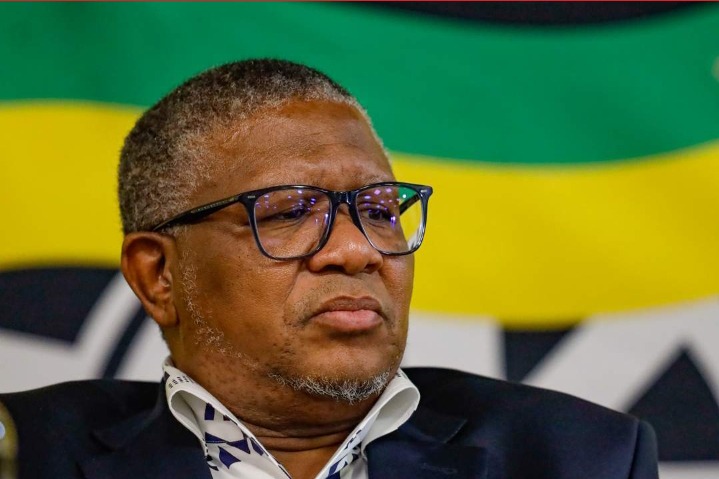
ANC Secretary General Fikile Mbalula has delivered a candid assessment of the party’s current struggles, attributing its decline to a combination of corruption, service-delivery failures, high unemployment, and the scourge of state capture. According to Mbalula, these issues have eroded the ANC’s moral authority and significantly weakened its relationship with vital segments of the population, particularly young people.
Mbalula’s remarks have sparked intense public reaction, with social media platforms buzzing after he openly acknowledged the challenges facing the ruling party. His admission has been interpreted by many as a rare moment of transparency from a senior ANC official. “Ramaphosa will be very angry with him,” commented several commentators online, reflecting the perception that Mbalula’s revelations directly challenge the party’s leadership narrative.
The Secretary General stressed that corruption has not only tainted the party’s image but also undermined its ability to deliver basic services. Mbalula linked the party’s declining credibility to its failure to address unemployment and improve the living conditions of South Africans. Young people, who once formed the backbone of the ANC’s support base, have increasingly distanced themselves from the party due to perceived neglect and mismanagement.
Mbalula’s observations come amid growing public dissatisfaction with political leadership and the effectiveness of governance. Analysts suggest that such candid statements could signal internal friction within the ANC, as leaders grapple with how to respond to mounting criticism without alienating core supporters.
While Mbalula did not provide a detailed roadmap for reversing these trends, his forthright acknowledgment of the party’s faults underscores the urgency of meaningful reform. The challenge for the ANC remains how to restore public trust, particularly among the youth, and to rebuild the moral authority that has historically been central to its political identity.
His frank assessment has ignited debate across the country, highlighting the tension between acknowledging past mistakes and charting a path forward. As public scrutiny intensifies, the ANC faces the difficult task of reconciling internal challenges with the expectations of a population increasingly vocal about accountability and results.
Mbalula’s revelations may be uncomfortable for party leadership, but they reflect a broader struggle within South Africa’s political landscape, where issues of corruption, governance, and youth engagement continue to dominate national discourse.


