

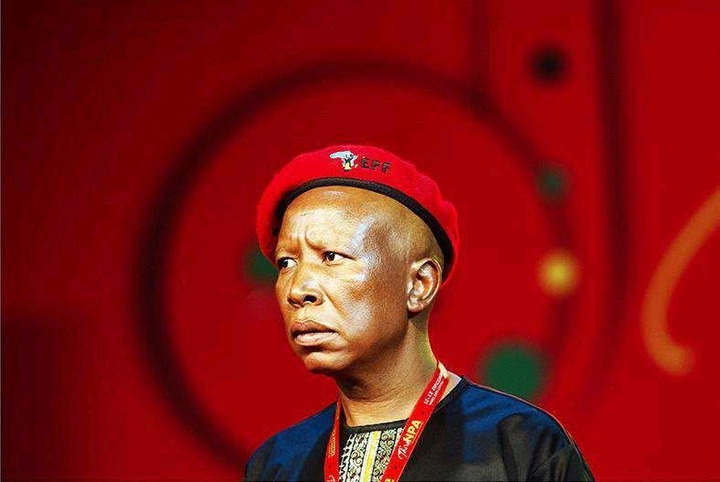
Julius Malema, the leader of South Africa’s Economic Freedom Fighters (EFF) party, has strongly criticized U.S. President Donald Trump, drawing a stark parallel between him and Adolf Hitler. Malema suggested that Trump’s foreign policy approach poses a serious threat to global well-being. This strong statement comes in the wake of heightened friction between South Africa and the United States, following Trump’s reassertion of unsubstantiated claims regarding the alleged mistreatment of white farmers in South Africa. South African authorities have consistently refuted these claims, labeling them as inaccurate and lacking historical basis.
Malema articulated his view that Trump’s public statements employ strategies historically used to legitimize oppression, by portraying certain groups as being under imminent threat. He argued that the deliberate amplification of fear and division on a global scale is not only reckless but also eerily reminiscent of some of the most tragic periods of the 20th century. According to Malema, Trump is using misinformation as a political tool, a tactic he believes could escalate racial tensions both within the United States and in other countries.
Furthermore, the EFF leader directed criticism at what he characterized as a prevailing imperialistic stance adopted by the United States towards Africa. He suggested that Trump’s remarks are part of a long-standing pattern where Western nations present their own interests as genuine humanitarian concerns. Malema cautioned that under Trump’s leadership, this tendency could exacerbate global disparities and intensify the challenges faced by Black and disadvantaged communities worldwide.
The response to Malema’s strong words has been notably mixed. Those who support his stance believe he is bravely confronting a world leader whose pronouncements can significantly influence potentially harmful global narratives. They view his criticism as essential for safeguarding the sovereignty and dignity of African nations. Conversely, critics argue that comparing Trump to Hitler is overly inflammatory and could worsen already delicate diplomatic ties between South Africa and the United States.
This ongoing debate has captured significant international attention and highlights broader concerns regarding race, power dynamics, and political discourse in a world that is increasingly divided. The dispute serves as a clear illustration of how influential international figures can shape global perceptions and how contested narratives continue to profoundly impact geopolitical relationships.


