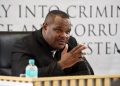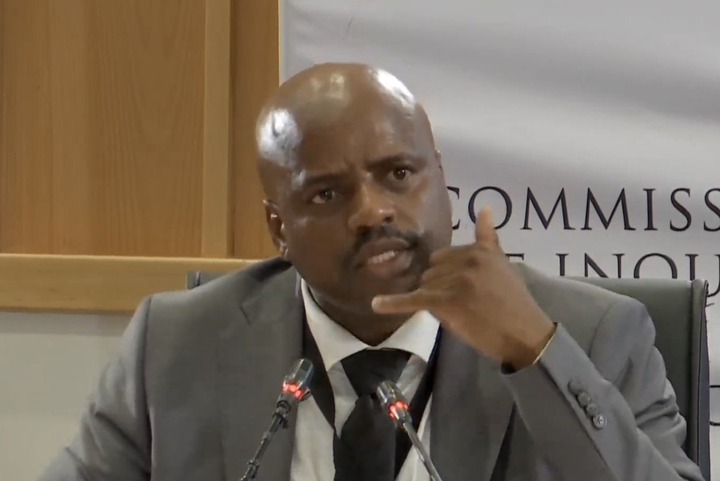
Suspended Ekurhuleni Metropolitan Police Department (EMPD) Deputy Chief Julius Mkhwanazi has told the Madlanga Commission that he received full state pay while he was suspended for three months amid the controversy over CAT VIP and the use of blue lights. Mkhwanazi described his time away from work candidly, saying, “I stayed for three months, enjoying state money for staying at home.”
The statement comes as part of the ongoing hearings into irregular contracts, misuse of authority, and potential corruption within the EMPD. Mkhwanazi’s suspension followed allegations that his actions facilitated the unlawful use of blue and red lights by Vusimuzi “CAT” Matlala’s private security and medical companies. These privileges, meant exclusively for law enforcement and emergency vehicles, had sparked investigations into both operational oversight and administrative accountability.
During his testimony, Mkhwanazi said that his suspension was officially enforced for the duration of three months while investigations into the CAT VIP scandal were conducted. Despite being removed from active duty, he confirmed that his salary and benefits continued uninterrupted, highlighting procedural norms in disciplinary processes where employees are sometimes placed on paid suspension pending investigation.
Observers at the commission noted that Mkhwanazi’s admission underscores the tension between accountability measures and procedural rights for public officials. While the suspension aimed to hold him accountable, the fact that he continued to receive pay has drawn public attention, especially given the gravity of the alleged irregularities involving private security contracts and misuse of municipal privileges.
The commission continues to investigate the full extent of the CAT VIP scandal, including the decision-making processes that allowed Matlala’s companies to receive unlawful privileges, and the role of senior EMPD officials in authorising and overseeing these actions. Mkhwanazi’s testimony contributes to understanding how internal disciplinary measures intersect with legal, operational, and administrative protocols in the municipality.
His candid admission is part of broader efforts by the Madlanga Commission to uncover irregularities within municipal policing structures and ensure accountability for both financial and operational misconduct. The commission’s findings are expected to shape recommendations on governance, oversight, and the management of senior police officials in the future.