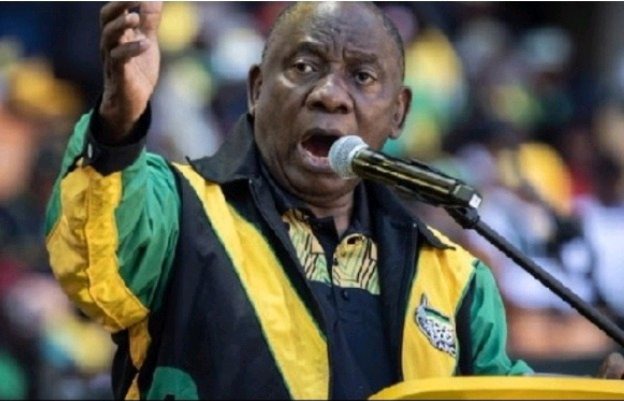
President Cyril Ramaphosa’s reported “meltdown” during a recent ANC national executive committee meeting has intensified tensions within the party, bringing renewed attention to an ongoing factional conflict that shows no signs of subsiding. Although he did not specify any individuals, insiders indicate that his intense gaze clearly implied his suspicion of those he believed responsible for a conspiracy to oust him.
Members of the NEC, who requested anonymity, reported that Ramaphosa fixated his gaze on Mondli Gungubele and Joe Phaahla as he stated, “I am aware of colleagues in this very room lobbying for my removal due to their dissatisfaction with their positions.” The comment astonished the assembly, effectively suspending what was anticipated to result in a motion of no confidence. However, according to those present, the tension was already so palpable that the president’s words merely concealed a growing rift.
Sunday World reports that the effort to remove him was backed by at least 60 members of the 80-member NEC, a substantial majority indicating how tenuous Ramaphosa’s grip on party leadership has grown. His decisive intervention may have halted the rebellion; however, sources maintain that the underlying infrastructure supporting the endeavor remains largely intact. It is believed that a renewed strike could potentially occur as early as this week.
At the core of the purported conspiracy are Gungubele and Phaahla, both of whom were reassigned to deputy minister roles within the government of national unity. Their political trajectory in recent years has prompted speculation regarding their dissatisfaction. Prior to the GNU reorganization, Gungubele held the position of minister in the presidency for 17 months, subsequently transitioning to the communications portfolio prior to Khumbudzo Ntshavheni assuming responsibility for the presidency portfolio. He now reports to Solly Malatsi of the DA, a change that many within the ANC perceive as a significant demotion.
Phaahla’s decline in prominence has been equally precipitous. Following his tenure as head of the health ministry, he was succeeded by Aaron Motsoaledi in June of the previous year, resulting in his marginalization during a period of significant internal party realignment.
For the time being, Ramaphosa’s decisive action at the NEC meeting has secured him a temporary reprieve—yet only marginally more than that. The prevailing sentiment among insiders is that the divisions have already been established, and unless significant changes occur, the ANC may face yet another intense internal confrontation.