A public dispute has erupted between President Cyril Ramaphosa and suspended Police Minister Senzo Mchunu over who authorised the disbandment of the Political Killings Task Team (PKTT)—a unit established to investigate politically motivated assassinations, particularly in KwaZulu-Natal .
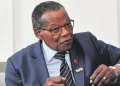
Mchunu, who is on special leave, insists he consulted Ramaphosa before disbanding the unit on 31 December 2024. Ramaphosa, in a written submission to Parliament’s ad hoc committee on police corruption last week, categorically denies this, stating he only learned of the decision weeks later from National Police Commissioner General Fannie Masemola .
The PKTT and Its Significance
The PKTT was responsible for investigating politically linked murders that have long haunted South Africa’s political landscape. Its sudden dissolution raised suspicions, particularly as it occurred on the eve of a new year when public attention was elsewhere .
KZN Police Commissioner Lieutenant General Nhlanhla Mkhwanazi, in his bombshell July 2025 briefing, alleged that the disbandment of the PKTT was intended to protect a criminal network known as the “Big Five” cartel, allegedly led by tender kingpin Vusimuzi “Cat” Matlala .
Mchunu’s Version
Mchunu told the Mail & Guardian that his intervention in the Medicare24 contract—a separate R360 million tender awarded to Matlala’s company—was what ultimately led to its cancellation . However, on the PKTT disbandment, he maintains he consulted Ramaphosa before acting .
His spokesperson declined to comment after Ramaphosa’s rebuttal, citing ignorance of the president’s submission .
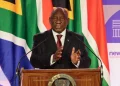
Ramaphosa’s Denial
Ramaphosa’s account is documented in parliamentary submissions and corroborated by Masemola, consistent with the principle that operational units fall under the national commissioner’s authority, not the minister’s . The president insists he was surprised by the disbandment of a unit tackling political assassinations .
Governance Crisis
The contradiction between the two accounts highlights a deeper governance crisis. If Mchunu acted unilaterally, it reflects ministerial overreach. If Ramaphosa was genuinely unaware, it raises troubling questions about his grip on the security cluster and how such a consequential directive could slip through without presidential intervention .
Political killings have long been a grim feature of South African politics, silencing councillors, activists and whistle-blowers. Disbanding the PKTT risks emboldening perpetrators and sending the message that accountability mechanisms can be dismantled at will .
Madlanga Commission Testimony
Testimony before the Madlanga Commission of Inquiry has exposed the broader context of criminal networks infiltrating the state. The PKTT was disbanded after the task team was on the verge of arresting senior officials implicated in the killing of prominent ANC members and mayors .
KZN Hawks head Major General Lesetja Mothiba testified that he had received instructions to stop investigations into the politically linked murders, including the 2021 killing of ANC councillor Nonhle Mkhulisi . Mkhwanazi also testified about attempts by senior national police leaders to disband his team, forcing him to temporarily “re-hatch” his investigators .
Unanswered Questions
Whether Mchunu acted alone, or Ramaphosa is distancing himself from a controversial decision, the result is the same: South Africans are left with two contradictory accounts, neither of which inspires confidence. Transparency in decisions affecting public safety, the president has acknowledged, is essential—and without it, public trust in the state’s ability to safeguard democracy against violence is severely undermined .