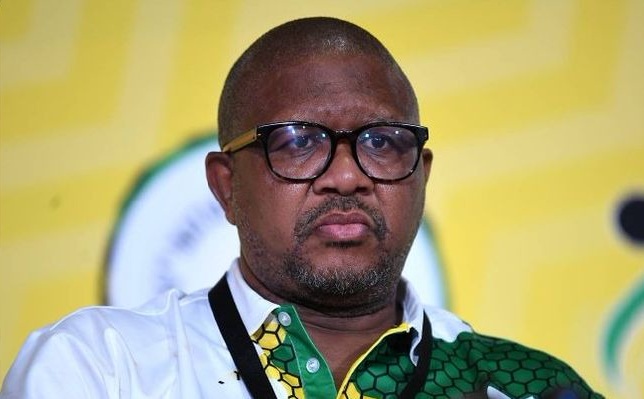
Fikile Mbalula, the Secretary-General of the African National Congress (ANC), has expressed his support for Oscar Mabuyane, the chairperson of the Eastern Cape, and stated that the leadership of the province has been successful in encouraging unity despite ongoing internal debates.
In remarks that emphasise the party’s stance on internal procedures, Mbalula commended Mabuyane’s leadership, saying, “This leadership of Mabuyane has united the Eastern Cape.” Mbalula’s remarks further reinforce the party’s position on internal processes. There will be conferences that come and go. A strong endorsement of stability inside one of the most politically vital regions for the African National Congress (ANC) is indicated by his words.
Through the course of its history, the Eastern Cape has been an essential component in the process of determining the course that the African National Congress will take. It has frequently served as both a stronghold and a battleground for the dynamics that occur inside the party. At a time when different groups within the party have expressed their concerns via a variety of methods, including written submissions and public discussion, Mbalula has made a statement claiming that the party is united.
On the other hand, Mbalula was adamant in his rejection of the idea that the party’s internal agenda was to be determined by official letters or through connections with the outside world. “You do not contact the African National Congress (ANC) with a letter. As he stated, “We will attend to them,” he emphasised that the organization has established systems that are designed to resolve disagreements and problems that arise within the organization.
His comments bring to light the African National Congress’s (ANC) unwavering commitment to maintaining discipline and adhering to organisational procedures, particularly as the organization navigates a difficult political landscape that is characterised by both internal contestation and external electoral pressures.
It has been suggested by political observers that Mbalula’s remarks are intended to bolster confidence in the leadership of the party while also limiting alternate avenues of involvement that may potentially erode unity. “Conferences will come and go,” he emphasised, alluding to the cyclical nature of leadership challenges within the African National Congress (ANC). He framed these fights as regular rather than as events that may potentially destabilise the organization.
Mabuyane, who has led the African National Congress (ANC) in the Eastern Cape through a time of organisational rebuilding, is largely regarded as a crucial figure in the province’s successful efforts to retain togetherness. In preparation for upcoming party engagements, Mbalula’s position is further strengthened by the popular support he has received.
As the African National Congress (ANC) continues to make preparations for forthcoming political milestones, the senior leadership of the organization has made it abundantly apparent that the organization would prioritise unity, structure, and internal resolution procedures over public conflicts.
It is anticipated that the developments will have an effect on the current conversation within the party, particularly given the fact that members and stakeholders are evaluating the equilibrium between open expression and organisational discipline.