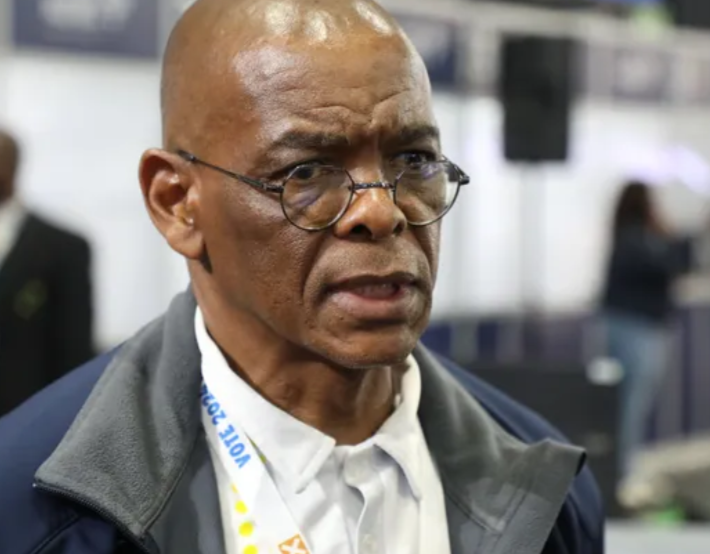
Former Free State Premier Ace Magashule has reflected on his long political relationship with the late Mosiuoa ‘Terror’ Lekota, emphasizing that despite their well-known disagreements over the years, their differences were never personal.
Magashule made the remarks while paying tribute to Lekota, a veteran anti-apartheid activist and former leader of Congress of the People (COPE). The two leaders often found themselves on opposing sides of South Africa’s political debates, particularly during the period when Lekota broke away from the African National Congress (ANC) to help form COPE in 2008.
Speaking about the late statesman, Magashule described Lekota as a principled leader who remained committed to his beliefs, even when those views placed him in direct conflict with former allies.
“Our differences were political and ideological, but they were never personal,” Magashule said. “We could argue strongly in public about the direction of the country or the party, but there was always mutual respect.”
Lekota, affectionately known as “Terror,” was widely recognized as a prominent figure in South Africa’s liberation struggle and democratic era. He served in several key roles after the end of apartheid, including as Minister of Defence and later as chairperson of the National Council of Provinces.
Magashule noted that political contestation is an inevitable part of democracy, but it should never erase the shared history of those who fought for the country’s freedom.
“We come from the same struggle. Many of us sacrificed for this country, and even when we disagreed, we understood the importance of respecting one another,” he said.
The former premier added that Lekota’s passing marks the loss of a seasoned political voice who contributed significantly to the country’s democratic journey.
Political leaders across party lines have been paying tribute to Lekota, highlighting his dedication to public service and his unwavering commitment to democratic values. Many described him as a fearless leader who was never afraid to speak his mind, even when it was unpopular.
Magashule concluded his tribute by expressing condolences to Lekota’s family, friends, and political colleagues, saying South Africa had lost a leader who played an important role in shaping the nation’s political landscape.
“As we remember him, we must honour his contribution to democracy and the liberation of our people,” Magashule said. “May his legacy continue to inspire future generations of leaders.”