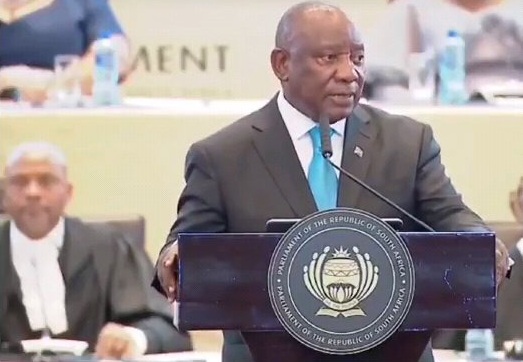
During his 2026 State of the Nation Address, Cyril Ramaphosa reaffirmed South Africa’s constitutional promise of equality and human dignity, making it clear that foreign nationals cannot be unlawfully excluded from public services such as healthcare and education.
Addressing the nation, Ramaphosa stressed that discrimination based on nationality has no place within the country’s legal framework. He reminded citizens and institutions alike that the Constitution protects the fundamental rights of everyone living in South Africa, regardless of origin. Public facilities, he emphasized, must function within these constitutional boundaries.
His remarks come amid growing debate around migration, service delivery, and social cohesion, as tensions in some communities have led to reports of foreign nationals facing hostility and exclusion. While acknowledging the real pressures on healthcare systems, schools, and other public services, the president cautioned against blaming migrants for deeper structural challenges like unemployment, strained infrastructure, and limited public funding.
Calling for reason over reaction, Ramaphosa urged South Africans to approach these issues with fairness and factual understanding rather than fear-driven narratives. He appealed to communities, officials, and service providers to uphold the rule of law and protect vulnerable individuals from discrimination and violence.
Human rights groups welcomed the statement, viewing it as a reaffirmation of South Africa’s constitutional and international commitments. Political analysts suggest the address signals a firm governmental stance against xenophobia and unlawful exclusion, while also acknowledging the need for improved migration management policies that are both humane and practical.
Critics, however, argue that inclusivity must be matched with tangible reforms to strengthen public services, particularly in overstretched sectors like healthcare and education. Ramaphosa responded to these concerns by highlighting ongoing efforts to enhance efficiency, expand capacity, and secure better funding across critical services.
He concluded by encouraging unity and shared responsibility, reminding the nation that access to dignity and basic services should never hinge on where someone was born.