The Madlanga Commission of Inquiry could become the most politically explosive investigation in South Africa’s democratic history, potentially unseating top African National Congress (ANC) leaders, slashing the party’s electoral support, and even prompting President Cyril Ramaphosa’s early resignation.
According to political analyst and author William Gumede, the commission—tasked with probing corruption, political patronage, and state capture remnants—poses a serious threat to the ANC’s already fragile unity. Gumede warns that the revelations expected from the inquiry could destroy what remains of the party’s credibility ahead of next year’s general elections.
“Many within the ANC are deeply nervous,” Gumede notes. “The Madlanga Commission will expose the extent to which factionalism and self-enrichment have crippled the organisation. Once these findings are public, it will be difficult for the party to retain even 20% of the national vote.”
The ANC’s electoral support has been steadily declining over the past decade, sliding from 62% in 2014 to just under 40% in the 2024 national polls—the party’s worst performance since 1994. Analysts believe another major corruption scandal could deal a fatal blow to its dominance.
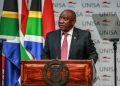
Gumede further argues that Ramaphosa’s presidency may not survive the fallout. “If senior allies of the president are implicated, pressure will mount for him to step down before the end of his term. The commission could fast-track internal divisions and trigger a leadership crisis,” he said.
Insiders within the party have already begun positioning themselves for a potential succession battle, with several provincial leaders privately expressing fears that the ANC could lose control of key metros and provinces.
The commission, led by retired Constitutional Court Justice Mbuyiseli Madlanga, is expected to begin public hearings later this month. Its mandate includes investigating alleged financial irregularities, abuse of public office, and the influence of private interests in government decision-making.
Political observers say the ANC’s response to the inquiry will determine its survival. “If the party handles the findings defensively, it will reinforce public anger,” Gumede cautioned. “But if it embraces accountability and renews its leadership, it might just slow its decline.”
For now, South Africans are watching closely as the Madlanga Commission begins what could be a historic reckoning for the ruling party—and possibly the beginning of the end for President Cyril Ramaphosa’s tenure.