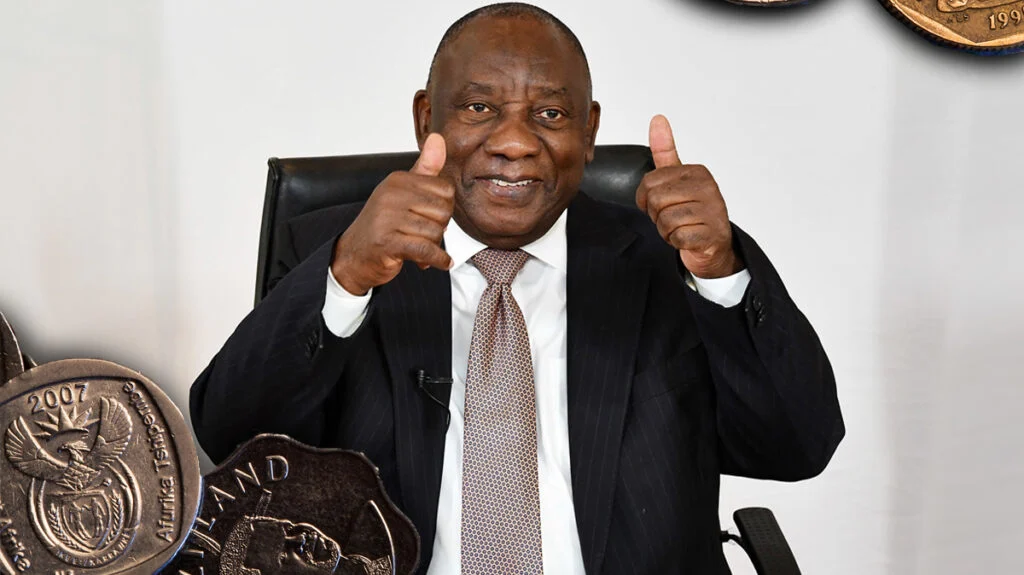
President Cyril Ramaphosa has announced that the Social Relief of Distress (SRD) grant will be continued indefinitely and fundamentally redesigned in 2026 to link income support with employment, skills development, and productive activity.
Delivering his State of the Nation Address in Cape Town on Thursday night, Ramaphosa described the grant—currently paid to approximately 8 million unemployed adults at R370 per month—as a “transformative instrument” that has kept millions out of food poverty since its introduction during the COVID-19 pandemic .
“Since it was introduced during COVID-19, the Social Relief of Distress Grant has kept millions of South Africans out of food poverty,” Ramaphosa said. “This year, we will redesign the grant to more effectively support livelihoods, skills development, work opportunities and productive activity” .
The address marks a significant policy shift. While National Treasury previously confirmed the grant is funded only until March 2027, Ramaphosa’s commitment signals a move toward a permanent income-support mechanism for the working-age unemployed, moving away from earlier discussions of a universal basic income grant .
Cost and conditions
The SRD grant currently costs the fiscus approximately R40 billion annually. Treasury has long advocated for tighter conditions, including income verification and employment-seeking criteria, to contain costs and improve targeting .
The November 2025 Medium-Term Budget Policy Statement extended the grant to March 2027 while proposals are finalised, and mandated stricter beneficiary reviews. These reviews have already saved government an estimated R44 million per month through data cross-matching with SARS, banks, credit bureaus, and NSFAS .
SASSA has to date completed approximately 240,000 grant reviews, with about 70,000 grants suspended due to non-compliance. Beneficiaries are given up to 90 days to respond before grants may lapse .
Uncertainty remains
Despite Ramaphosa’s commitment, the precise form and financing of the new grant remain unclear. Treasury has stated there are “no fixed timelines” for finalising replacement proposals, and that technical work is ongoing .
Civil society organisations, including the Universal Basic Income Coalition, have warned that linking grants to work-seeking conditions risks excluding millions of eligible beneficiaries in a labour market where formal jobs are scarce. Researchers note that at current rates of job creation, it would take over 200 years to absorb the 12.6 million South Africans currently unemployed .
Parliament’s finance committees have called for a comprehensive policy paper on the future of income support to be tabled before the 2026/27 budget, including quantified fiscal costs, financing options, and analysis of distributional impacts .
Further details are expected in the 2026 Budget Speech, to be delivered by Finance Minister Enoch Godongwana later this month .