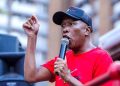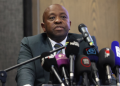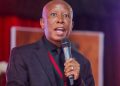
South Africa’s political climate has been heightened as forensic investigator Paul O’Sullivan appeared before an Ad Hoc Committee of Parliament, delaying the scheduled Radio 702 interview with Economic Freedom Fighters (EFF) Commander-in-Chief Julius Malema. Reports indicate that the show, which was supposed to include Malema discussing various political and governance matters, had to be rescheduled due to a scheduling conflict with O’Sullivan’s high-profile parliamentary appearance.
The committee meeting is a part of a continuing investigation into claims of wrongdoing inside governmental institutions, as well as issues of accountability and leadership. It has attracted considerable political and popular attention. Continuing political pressure, according to the EFF, is the direct cause of O’Sullivan’s appearance. Party officials assert that the EFF’s efforts to influence legislation and advocate for civil society as a whole were critical in persuading him to testify.
“The EFF has been consistently pushing for O’Sullivan to step down from his position, both in Parliament and in society at large, even though he has tried to invent a security crisis that does not exist, with the backing of Speaker Thoko Didiza and the ANC Parliamentary Caucus,” the party stated. O’Sullivan had previously voiced worries about his safety, which brought up the possibility of distant testimony.
Some political observers, however, have seen his ultimate in-person appearance as a watershed point in the larger struggle for openness and responsibility. According to political scientists, the decision to delay Malema’s interview shows how legislative processes influence public opinion and news coverage of national politics.
“The intensity of South Africa’s current political climate is highlighted by the convergence of high-profile political figures, public hearings, and media platforms,” commented one expert. The interview has been rescheduled, according to Radio 702, which plans to give Malema a chance to address the latest news on the parliamentary probe and other national matters.
In the days to come, the political fallout from O’Sullivan’s evidence will likely be revealed as the Ad Hoc Committee proceeds with its work. Parliamentary leadership and the African National Congress have justified the committee’s work as essential and consistent with their constitutional monitoring duties, while the Economic Freedom Fighters have hinted that they will be watching them closely.
Fans and political insiders are eager to hear Malema’s viewpoint on the current parliamentary drama and what it means for the future of South Africa’s politics, therefore the interview has been rescheduled for later this week.