
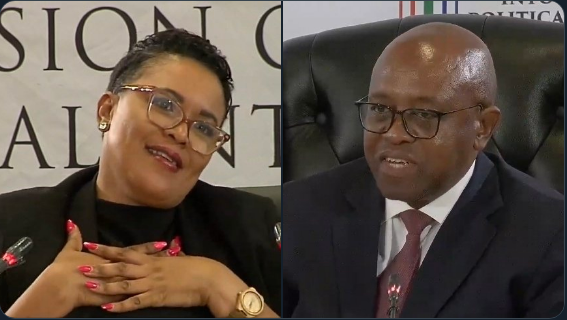
SAPS Brigadier Rachel Matjeng has defended the legitimacy of her relationship with controversial businessman Vusimuzi “Cat” Matlala, telling the Madlanga Commission that the absence of traditional romantic language did not mean the relationship was not genuine.
Matjeng, who serves as Section Head for Quality Management at SAPS Forensic Services in Pretoria, appeared before the commission investigating alleged criminal infiltration, corruption and political interference within the criminal justice system.
Commissioner Madlanga questioned Matjeng about the nature of her relationship with Matlala, expressing concern that the pair never referred to each other using conventional affectionate terms such as “love” or “honey.” He suggested that this raised doubts about whether the relationship was truly romantic.
Matjeng firmly rejected the implication.
“I am not a romantic person,” she told the commission. “I am not into calling people honey, love, or whatever.”
She explained that the relationship operated on its own terms and that affection was expressed differently. According to Matjeng, she referred to Matlala as “Mr V,” while he called her “Diva.” She described these as personal pet names that reflected mutual respect rather than emotional distance.
The exchange formed part of broader questioning into Matjeng’s association with Matlala, who has been repeatedly linked to allegations of corruption, political connections and interference in police processes. The commission is probing whether personal relationships between SAPS officials and politically connected individuals may have compromised the integrity of law enforcement institutions.
Madlanga noted that intimate relationships can be relevant when assessing possible conflicts of interest, particularly where senior police officials interact with individuals under investigation or scrutiny. He emphasized that the commission was not judging personal choices, but rather seeking to understand the depth and nature of relationships that may intersect with professional duties.
Matjeng maintained that her relationship with Matlala did not influence her work or decision-making within SAPS. She insisted that her professional responsibilities were carried out independently and in accordance with policy, and that there was no improper conduct arising from their association.
The commission has heard extensive testimony in recent weeks concerning alleged political pressure, selective law enforcement and the misuse of police resources to protect influential figures. Witnesses have raised concerns about blurred lines between personal relationships and institutional accountability.
Matjeng’s testimony is expected to be weighed alongside other evidence as the Madlanga Commission continues its inquiry. The commission’s findings could have far-reaching implications for senior police officials and the broader credibility of South Africa’s criminal justice system.