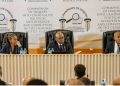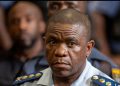
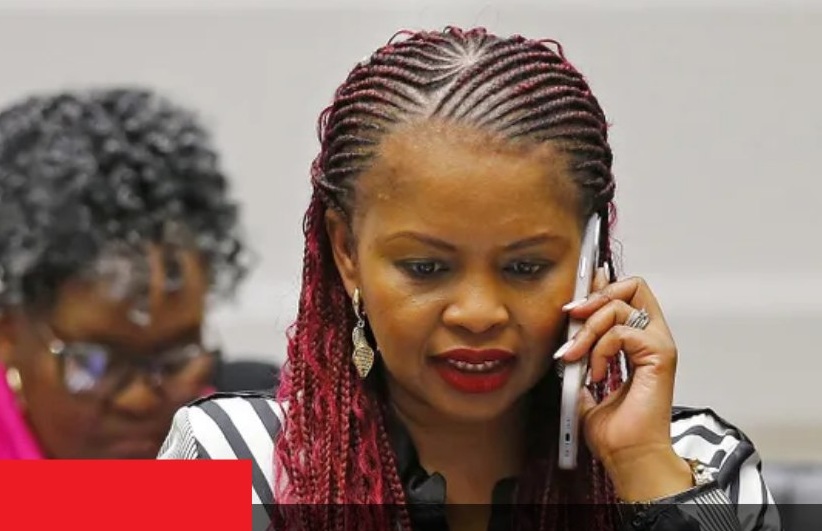
The public has been paying greater attention to accountability in the security cluster and rekindling worries about unresolved corruption in the government as a result of ANC Member of Parliament Khusela Diko’s formal request for General Dumisani Khumalo, a top police officer, to explain his claimed role in a project connected to the era of State Capture.
Amid rising concerns in Parliament about the sluggish rate at which people accused of being involved in activities related to State Capture are being held accountable, Diko, who presides over Parliament’s Portfolio Committee on Communications and Digital Technologies and has been a vocal proponent of moral governance, brought up the subject. Her intervention demonstrates a renewed commitment among some politicians to see to it that senior government leaders are held accountable, no matter their position or clout.
In prior investigations related to state capture networks, the project has been highlighted in data presented to Parliament that links General Khumalo directly or indirectly to it. Diko has maintained that, despite the fact that the project’s exact details have not been made public, clarity is desperately needed to safeguard the integrity of state institutions, notably the South African Police Service (SAPS), which is crucial in the fight against corruption and organized crime.
Khumalo was asked by Diko in her request to provide an unambiguous statement about his participation in the project, the nature of that participation if it exists, and whether all procurement and operational procedures followed the law. She also demanded complete disclosure of any ties to anyone or organization that had previously been implicated by commissions of inquiry, investigative journalists, or law enforcement organizations.
“The era of State Capture has left deep scars on our democracy,” Diko stated, adding that transparency and accountability are the only ways to restore public trust in institutions. “In circumstances when concerns arise, particularly those concerning senior officials charged with enforcing the law, such concerns must be addressed completely and promptly. ”
The issue arises at a time when civil society and the people are urging Parliament to prove that the Zondo Commission’s lessons are being put into practice. Critics have often cautioned that a lack of decisive action against suspected misconduct runs the danger of fostering a climate of impunity in the state.
Diko’s appeal has not yet received a public response from General Khumalo. Nonetheless, sources close to the situation indicate that there may be internal procedures in place to evaluate the claims and ascertain if more inquiry is necessary.
Political experts observe that Diko’s action reflects wider divisions within the ANC as the party strives to strike a balance between internal unity and rising calls for good government in advance of upcoming elections. The way the issue is handled might be a test case for whether Parliament is prepared to address sensitive issues involving prominent people.
With the emphasis still squarely on accountability, Diko’s appeal reinforces a distinct message. Ongoing unresolved links to State Capture, whether real or perceived, will continue to attract attention, and silence is no longer an option.