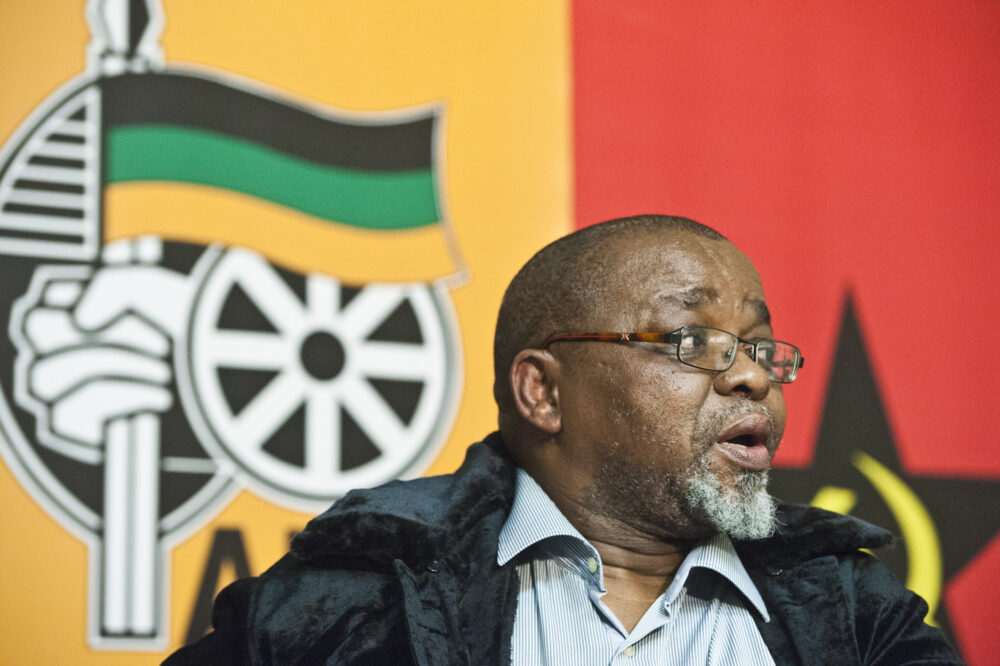
ANC national chairperson Gwede Mantashe has issued a stern warning to the South African Communist Party (SACP), saying the organisation risks paying a heavy price at the polls if it continues on its current political path. His comments reflect deepening tensions within the long‑standing Tripartite Alliance, as disagreements over strategy, accountability, and political direction increasingly play out in public.
Mantashe’s remarks come at a time when relations between the ANC and the SACP appear more strained than at any point in recent years. While the two organisations have historically worked closely together, united by a shared liberation history and ideological overlap, recent public statements by SACP leaders have been more openly critical of the ANC’s leadership and governance record. This shift, according to Mantashe, carries serious political consequences.
Speaking on the matter, Mantashe suggested that the SACP’s growing distance from the ANC and its increasingly independent posture could alienate voters who are already frustrated by political infighting. He argued that voters are less interested in internal battles and ideological point‑scoring, and more focused on practical solutions to unemployment, poverty, and service delivery. In his view, organisations that appear divided or preoccupied with internal disputes risk losing credibility with the electorate.
Mantashe also cautioned that the SACP should not underestimate voter sentiment. He implied that the party’s influence, particularly in communities traditionally aligned with the ANC‑led alliance, may not be as secure as it once was. According to him, ordinary voters are increasingly impatient with political organisations that seem disconnected from their daily struggles, regardless of their historical role in the liberation movement.
The warning follows a series of sharp exchanges between ANC and SACP leaders, with the communists calling for stronger action against corruption and, at times, appearing to distance themselves from the ANC’s electoral fortunes. Some SACP leaders have previously suggested that the party should assert its independence more clearly, raising questions about its long‑term relationship with the ANC.
Political analysts say Mantashe’s comments signal growing anxiety within the ANC about the impact of public divisions ahead of elections. With voter support increasingly fragmented and smaller parties gaining ground, unity within traditional alliances is seen as crucial. Any perception of instability or disunity, analysts argue, could further erode trust among voters who are already considering alternatives.
From the SACP’s perspective, its leadership has maintained that speaking out against wrongdoing and governance failures is necessary to remain principled and relevant. They argue that silence or unquestioning loyalty would betray the values the party claims to represent. However, critics within the ANC believe this approach risks weakening the alliance and confusing voters about where the SACP truly stands.
Mantashe’s message is clear: political credibility is ultimately judged at the ballot box. While ideological debates and internal critiques may play well within party structures, they do not always resonate with voters facing economic hardship and social instability. He believes that if the SACP misreads the public mood, it could face serious electoral consequences.
As South Africa’s political landscape becomes more competitive and unpredictable, the future of the ANC‑SACP relationship remains uncertain. Whether Mantashe’s warning prompts a recalibration within the alliance, or further entrenches divisions, will likely become clearer as election campaigns intensify and voters make their voices heard.