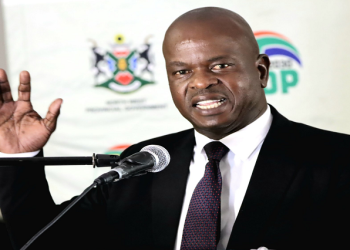

The sudden departure of Chief Evidence Leader Advocate Terry Motau SC from the Madlanga Commission of Inquiry into Alleged Police Corruption and Criminal Cartels has allowed the titan of the legal profession to finally speak up. There was a brief hiatus in the commission following the illness of crucial witness Lt. Gen. Dumisani Khumalo, and his absence sparked weeks of speculation.
The resignation, which Motau announced in an open broadcast with Radio 702, was effective September 11. He gave as his reason the ongoing conflicts he had with the commission’s leadership. He insisted that his choice was based on logic and strategy rather than sentiment and that it had more to do with systemic issues than individual grudges.
The commission’s fiscal transparency was at the heart of his worries. Motau expressed concern that the government’s R147 million budget for such a massive undertaking could be hindered by financial uncertainty, a lesson he believes should be taken away from the expensive Zondo Commission. As he put it, “you cannot responsibly allocate tasks or avoid previous missteps” (in the absence of defined budget line items).
He emphasised his dedication to public service despite a substantial pay drop, and Motau made it clear that his retirement had nothing to do with money. Still, he was honest enough to realise that his leadership skills were hampered by operational opacity, which permeated every aspect of the business.
Although Motau resigned, he stated his unwavering commitment to the commission’s goals. Still rattled by the troubling testimony he had heard so far, he emphasised the need for facts rather than spectacular assertions. “The Commission can help this country turn a corner if evidence is backed and institutions respond,” he stated.
With Motau’s departure, the commission’s ability to fulfil President Ramaphosa’s ambitious timeframes is called into question, revealing administrative weaknesses that could jeopardise the results. The country is now waiting with bated breath to see if the investigation into police misconduct delivers on its promises of transparency and fairness.