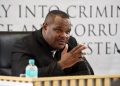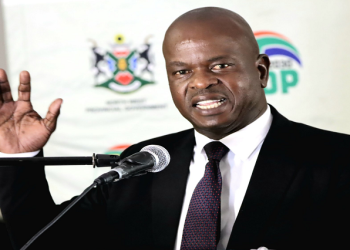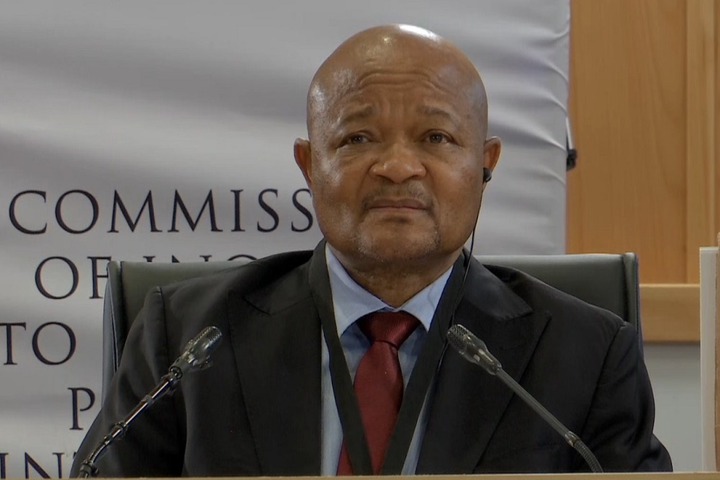
At a tense parliamentary hearing this week, suspended police minister Senzo Mchunu told lawmakers that the budgetary appropriation for the National Political Killings Task Team (NPKTT) beyond 2022 was irregular — because no formal extension of the unit’s mandate had been granted under the Public Finance Management Act (PFMA).
Mchunu explained that the NPKTT was originally established in July 2018 as a “special project” to probe politically motivated killings. Its continued existence beyond 2022, he said, would have required a yearly extension authorised by the national police commissioner in consultation with him. Because no such notice was received after the previous leadership left, Mchunu argued the unit was effectively operating outside its legal budgetary bounds, making any further expenditure “irregular under the PFMA.”
That, Mchunu told the committee, formed the basis for his decision to disband the NPKTT on 31 December 2024. The directive dissolved the team and transferred its responsibilities to a permanent unit, aimed at integrating political-killings investigations into broader crime-fighting structures.
Defending the move, Mchunu said it was not driven by any improper motive or desire to shield suspects, but by governance concerns. “There is no project in government that runs indefinitely,” he told the committee — emphasising that the NPKTT was meant to be temporary from the outset.
He further argued that the disbandment was part of a broader restructuring of police resources. Rather than sustaining an isolated task team, he proposed consolidating efforts through more permanent, budgeted structures — pointing to a 2019 internal work-study recommending that NPKTT functions be absorbed into a regular Murder and Robbery Unit.
Yet critics at the committee remain unconvinced. South African Police Service’s own Chief Financial Officer, Puleng Dimpane, testified that she never briefed Mchunu on PKTT finances, and that none of her presentations between July 2024 and June 2025 mentioned the unit — directly contradicting Mchunu’s assertion.
Meanwhile, former provincial police commissioner Nhlanhla Mkhwanazi described the decision as “irrational and irregular,” insisting the team was still operational and effective as recently as September 2024. He also challenged the claim that its functions had been properly re-assigned.
As the ad hoc committee continues its probe into alleged criminal infiltration of the police service, Mchunu remains in the hot seat: defending his decision to disband a unit created to fight political assassinations — by arguing that budget rules, not politics, drove the move. The coming days are likely to deepen scrutiny over whether the formalities under the PFMA were genuinely violated, or whether the disbandment served other, darker ends.