
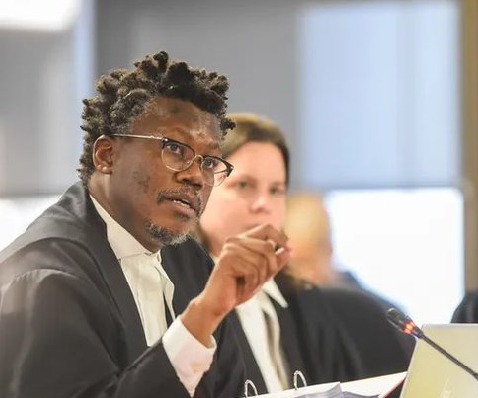
Renowned advocate Tembeka Ngcukaitobi has raised sharp criticism over the legal defense of Police Minister Senzo Mchunu, warning that greed for money could ultimately tarnish careers in the legal profession. Ngcukaitobi’s remarks were made during discussions surrounding the ongoing Madlanga Commission of Inquiry, which is probing high-level misconduct and governance failures within the South African Police Service (SAPS).
Ngcukaitobi questioned why any legal practitioner would choose to represent a figure allegedly linked to extensive administrative failings. “Greed for money will be the end of his career,” he asserted, referring to the counsel representing Mchunu. He criticized Mchunu for his perceived role in undermining SAPS operations, describing the minister as part of what some analysts term the “Big Five” responsible for systemic dysfunction within the organization.
The Madlanga Commission, established to investigate allegations of mismanagement, abuse of power, and irregular conduct within law enforcement, has become a focal point for accountability debates in South Africa. Witnesses have repeatedly testified to governance lapses and leadership failures that, according to critics, have eroded public trust in SAPS.
Ngcukaitobi’s comments highlight a growing tension in South Africa’s legal and political spheres, where ethical considerations intersect with high-profile legal representation. He suggested that associating with individuals accused of misconduct not only risks reputational damage for lawyers but also raises questions about professional integrity in high-stakes cases.
The commission has previously heard testimony implicating senior officials in irregular budget allocations, mismanagement of specialized units, and other administrative irregularities. Observers note that legal representation in such politically sensitive cases can attract scrutiny, especially when the officials involved are alleged to have engaged in practices that compromise public safety and institutional credibility.
Public reaction to Ngcukaitobi’s statement has been mixed, with some praising his forthrightness in calling out perceived ethical lapses, while others argue that every individual is entitled to legal representation regardless of allegations. Nevertheless, the critique underscores the delicate balance between legal duty and professional ethics, particularly in cases with far-reaching implications for governance and accountability.
As the Madlanga Commission continues its proceedings, questions persist about the accountability of political and legal actors alike, reinforcing the importance of transparency and integrity in both public service and the legal profession.