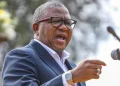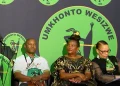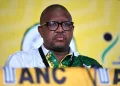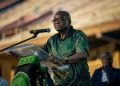
The decision to place Police Minister Senzo Mchunu on leave has been challenged by former president Jacob Zuma and members of the uMkhonto weSizwe Party. Proceedings are currently underway at the Pretoria High Court. The lawsuit asks a court to rule that the president’s conduct is “unlawful and politically motivated,” and to let Minister Mchunu carry out his responsibilities unimpeded.
Ramaphosa stated that the necessity to protect the police ministry’s reputation during investigations and the continuing allegations against Mchunu were the reasons for the leave. Officials in the government insist that this is a procedural step that stresses accountability and openness and complies with constitutional requirements; they categorise it as a punishment-free measure. The case has the potential to establish significant precedents concerning the president’s power to suspend or dismiss cabinet members while investigations are underway, according to legal experts.
Professor Thabo Dlamini, an authority on constitutional law, has pointed out that the result might have far-reaching effects on ministerial responsibility and executive power, drawing close attention from both the public and political analysts. Protesting what they call “selective governance” and “political targeting,” supporters of Zuma and the uMkhonto weSizwe Party congregated outside the courthouse.
The case is likely to ignite a flurry of discussion over the scope of executive power, ministerial rights, and constitutional authority. As a high-stakes showdown between the current president, a political party, and a past president, the hearing is expected to go on throughout the day. Many analysts have pointed out that the verdict could impact future governance procedures in South Africa, and a ruling is anticipated in the coming weeks.